Knowing what technology your prospects use is one of the most underrated advantages in B2B sales. Technographic data tells you which CRM a company runs, what marketing automation they use, which cloud provider hosts their infrastructure, and dozens of other technology choices that reveal budget, sophistication, and competitive openings.
Most sales teams treat technographic data as a nice-to-have checkbox in their enrichment flow. That is a mistake. When used strategically, technographic intelligence becomes a competitive weapon that helps you identify displacement opportunities, time your outreach, and position your product against the specific tools your prospects already use.
What Technographic Data Actually Reveals
At the surface level, technographic data is a list of software tools a company uses. But underneath that list is a rich layer of strategic intelligence.
Budget and Sophistication
A company running Salesforce Enterprise, Marketo, and Snowflake has a very different budget and technical sophistication than one using HubSpot Free, Mailchimp, and Google Sheets. The technology stack is a proxy for how much a company invests in its operations and how mature their processes are.
This matters for positioning. If a prospect runs enterprise-grade tools across the board, they expect enterprise-grade capabilities from new vendors. If they run SMB tools, they probably care more about ease of use and price than advanced features.
Integration Opportunities
If a prospect uses tools that integrate natively with your product, that is a selling point. If they use tools that are incompatible, that is a barrier. Knowing the tech stack before your first conversation lets you lead with integration fit rather than discovering incompatibility mid-deal.
Competitive Presence
If a prospect uses a direct competitor, you know exactly who you are displacing. You can prepare competitive positioning, address the specific limitations of that competitor, and time your outreach around contract renewal windows.
Growth Stage
The tools a company uses often indicate where they are in their growth journey. Startups use lightweight, free-tier tools. Scaling companies adopt mid-market solutions. Enterprises standardize on platform-grade systems. The technology transition points are buying moments.
Sources of Technographic Data
Technographic data comes from several sources, each with different coverage and accuracy characteristics:
Web scraping and code analysis: tools like BuiltWith and Wappalyzer scan websites for JavaScript tags, tracking pixels, and embedded code that reveals which marketing, analytics, and advertising tools a company uses. Strong for marketing tech, weaker for internal tools like CRM or HR systems.
Data partnerships: providers like HG Insights and Bombora aggregate technographic data from reseller relationships, job postings, and proprietary data networks. Broader coverage than web scraping but less real-time.
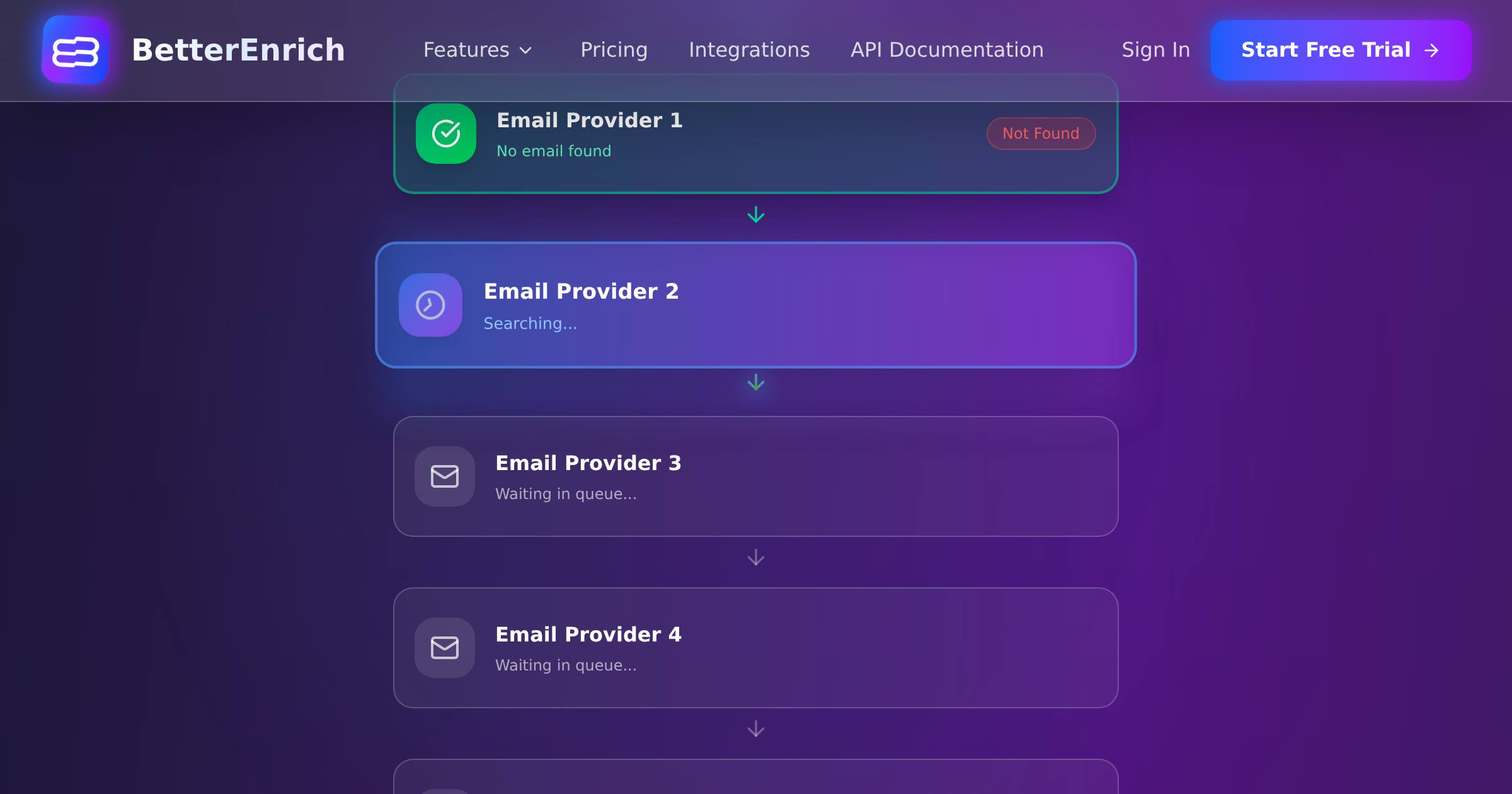
Enrichment platforms: multi-source enrichment platforms include technographic data alongside firmographic and contact data. BetterEnrich can surface technology stack information as part of the waterfall enrichment process.
Job postings: a company hiring a Salesforce administrator uses Salesforce. A company looking for a Marketo specialist uses Marketo. Job postings are a surprisingly reliable technographic signal, and they also indicate that the company is actively investing in that technology.
Competitive Displacement Plays
The most powerful use of technographic data is identifying prospects who use a competitor and building a targeted displacement campaign.
Step 1: Identify Competitor Users
Use technographic enrichment to build a list of companies using a specific competitor product. Filter by your ICP criteria (company size, industry, geography) to focus on accounts that are both a competitive match and a good fit.
Step 2: Research the Competitor Weaknesses
Every product has known weaknesses. Maybe the competitor is expensive and recently raised prices. Maybe their support has deteriorated. Maybe their product lacks a feature that your customers love. Build your messaging around these specific gaps.
Step 3: Time the Outreach
Technographic data sometimes reveals contract timing. If contracts are typically annual, and you can estimate when the prospect adopted the tool, you can time your outreach to land 3-4 months before renewal. That is when buyers start evaluating alternatives.
Even without exact timing, the combination of technographic data (they use Competitor X) plus intent data (they are researching alternatives) is a powerful trigger for displacement outreach.
Step 4: Personalize the Pitch
When you know a prospect uses a specific competitor, your outreach can be highly specific. Reference the competitor's known limitations. Show how your product addresses those specific gaps. Share migration stories from other customers who switched.
Do this with subtlety. Blatant competitor bashing backfires. The prospect chose that tool for a reason. Acknowledge the strengths while highlighting the areas where your solution offers more.
Technographic-Driven Account Scoring
Layer technographic data into your lead scoring model:
- Uses compatible technology: +5 points (integration fit)
- Uses competitor product: +7 points (displacement opportunity)
- Uses complementary tools but no solution in your category: +8 points (whitespace opportunity)
- Uses incompatible technology: -3 points (integration barrier)
- Uses free-tier tools across the board: -2 points (likely budget-constrained)
Technographic scoring adds a dimension that firmographic data alone cannot provide. Two companies might be identical in size and industry, but one runs Salesforce Enterprise (high budget, complex needs) while the other runs a free CRM (tight budget, simple needs). The technographic signal differentiates them.
Monitoring Technology Changes
Technographic data is not static. Companies adopt new tools, replace old ones, and change providers. Monitoring these changes creates outreach triggers.
When a target account adopts a new CRM, they need everything that integrates with it. When they drop a marketing automation platform, they are evaluating alternatives. When they add a data warehouse, they might be building a composable data stack.
Set up monitoring for technographic changes at your target accounts. Some providers offer alerts when technology stack changes are detected. These alerts are high-quality outreach triggers because they indicate active evaluation and change.
Building Technographic Segments
Segment your prospect universe by technology stack for targeted campaigns:
- Salesforce users: emphasize your Salesforce integration, data flows, and AppExchange presence
- HubSpot users: highlight your HubSpot native app, workflow automation, and ease of setup
- No CRM users: focus on getting started with customer data management alongside your tool
- Competitor users: run displacement campaigns with competitive messaging
Each segment gets its own content, landing pages, case studies, and email sequences. The technographic data makes the segmentation possible. The enrichment data provides the contact information to actually reach these segments.
Combining Technographic with Other Data Types
Technographic data is most powerful in combination:
Technographic plus firmographic: a 200-person SaaS company using Salesforce and Marketo has a very specific profile. You can predict their challenges, budget range, and buying process.
Technographic plus intent: a company using a competitor that is also researching alternatives right now. That is a hot lead. Act immediately.
Technographic plus chronographic: a company that just hired a new CRO and uses your competitor's product. The new CRO might want to bring in their preferred tools. That convergence of signals is a near-perfect trigger.
Enrichment platforms that provide all these data types in a single query save time and ensure data consistency. When your firmographic, technographic, and contact data all come from the same enrichment workflow, you avoid the data reconciliation headaches that come from stitching together multiple tools.
Privacy Considerations
Technographic data is generally considered business information rather than personal data, which places it outside the strictest GDPR and CCPA restrictions. What technology a company uses is about the organization, not the individual.
However, the contact data you use to reach people at those companies is personal data and must be handled with appropriate compliance. Make sure your enrichment provider has clear data provenance and compliance documentation.
The Bottom Line
Technographic data transforms competitive intelligence from guesswork into a systematic practice. You stop hoping to find displacement opportunities and start engineering them. You stop guessing about integration fit and start knowing. And you stop sending generic pitches and start delivering messages that speak to the specific technology context your prospects live in.
The enrichment layer that provides technographic intelligence alongside firmographic data and verified contacts is the foundation. Without it, competitive intelligence is manual, inconsistent, and incomplete. With it, every prospect comes with a technology profile that tells you exactly how to position, when to engage, and what to say.