FullEnrich and BetterEnrich are among the most directly comparable tools in the enrichment market. Both are built around waterfall enrichment, cascading queries through multiple data providers to maximize contact coverage. Both target teams that have outgrown single-source tools and want better find rates without managing multiple vendor contracts themselves. The differences come down to implementation details, data source selection, pricing mechanics, and verification quality.
Architecture Comparison
FullEnrich cascades through 15 or more data vendors including well-known providers like Apollo, DropContact, and Hunter. The platform aggregates results from these sources and returns the best available data for each contact. The vendor roster is a mix of database-access tools and specialized discovery engines.
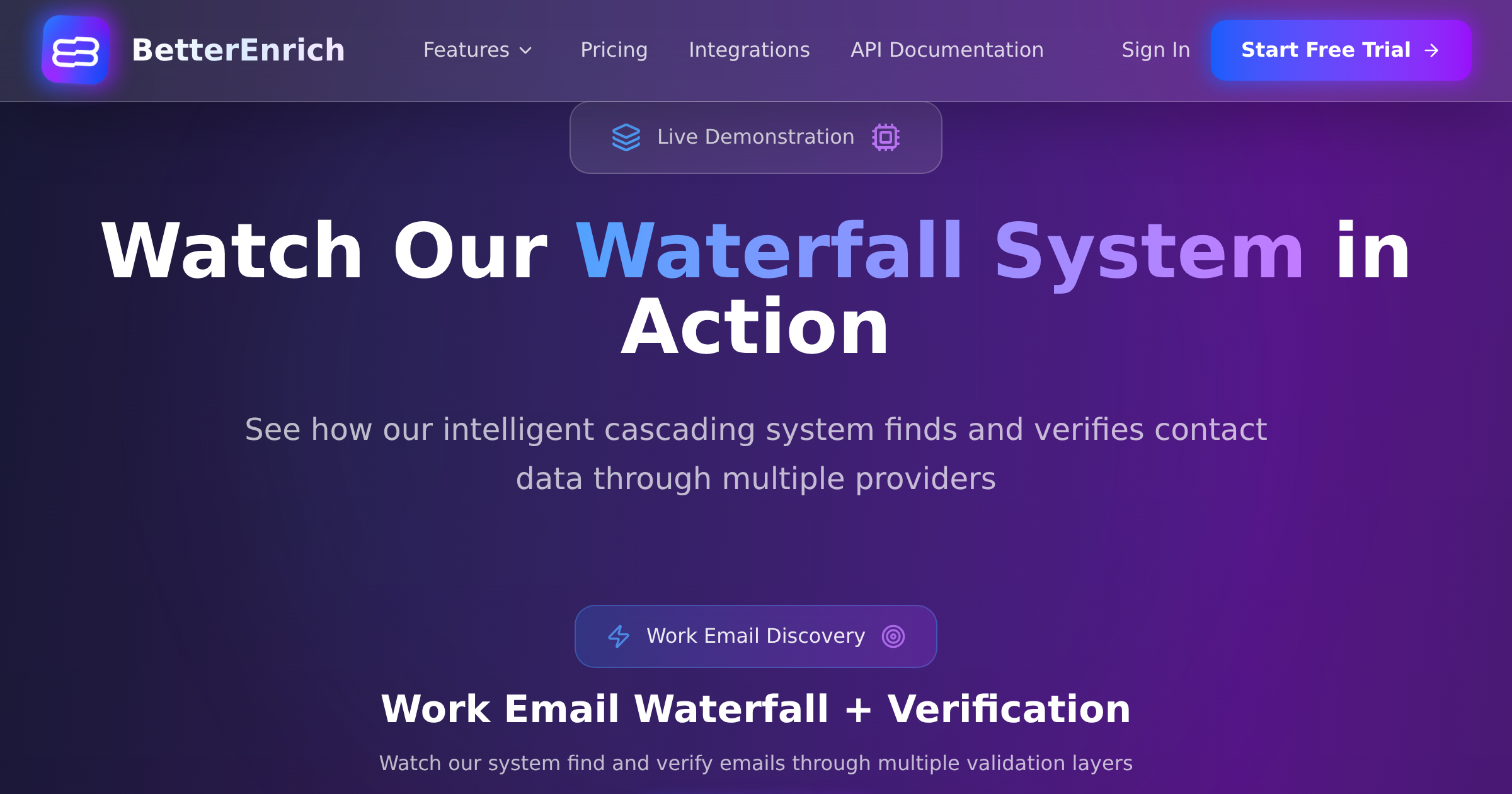
BetterEnrich cascades through 17 or more premium data sources using its own waterfall logic. BetterEnrich does not publicly list all of its data providers, focusing instead on outcome metrics like coverage rate and accuracy rate. The additional sources in BetterEnrich's waterfall provide a marginal but potentially meaningful coverage advantage, particularly for harder-to-find contacts.
Both platforms handle the complexity of multi-provider enrichment behind a single API or interface. You do not need to manage individual vendor contracts, API keys, or data normalization. The platform does all of that for you.
Coverage and Accuracy
Both tools deliver waterfall-level coverage in the 85 to 95 percent range, significantly better than single-source tools at 50 to 70 percent. The coverage difference between the two is marginal and will depend on your specific ICP.
Where the tools diverge more noticeably is verification. BetterEnrich emphasizes its verification capabilities, particularly the three-step phone verification (format validation, line-type detection, and location verification) and specialized catch-all email verification. These verification layers provide higher confidence that the data returned is not just found but actually usable.
FullEnrich also verifies results, though the depth of verification for phone numbers specifically is less prominently featured. For teams where phone data quality is critical, testing both tools against the same dataset with a focus on phone verification results will reveal meaningful differences.
Pricing Model
Both tools use outcome-based pricing rather than per-seat subscriptions, which is typical for waterfall enrichment platforms. The specific per-contact pricing varies and should be compared at your expected volume level.
BetterEnrich's pay-per-valid model is explicitly marketed as charging only for verified, usable results. Failed lookups and landline phone numbers are free. This model eliminates waste from unsuccessful enrichment attempts, which is particularly valuable when enriching harder-to-find contacts where failure rates are higher.
FullEnrich's pricing should be evaluated on the same cost-per-valid-contact basis. Request pricing for your expected monthly volume and calculate the effective per-contact cost accounting for expected find rates.
API and Integration
Both platforms offer API access for programmatic enrichment. BetterEnrich's API documentation is publicly available at betterenrich.readme.io, supporting both synchronous single lookups and asynchronous bulk processing. Both tools integrate with popular no-code platforms like Zapier and Make.
When evaluating integration, test both APIs for response time, error handling, and documentation quality. The API experience matters significantly for teams building automated enrichment pipelines where the enrichment tool is one step in a larger workflow.
Making the Decision
For a direct comparison between FullEnrich and BetterEnrich, run a bake-off with your actual data. Send the same 500 to 1,000 records to both platforms and compare find rate, accuracy (especially for phone numbers), cost per valid contact, and response time. The results will be specific to your ICP and geography.
BetterEnrich's advantages include more data sources in the waterfall (17+ versus 15+), explicit three-step phone verification, pay-per-valid pricing that eliminates waste, no charge for landlines, and 100 free credits for evaluation. FullEnrich may offer advantages in specific areas depending on which data vendors are in their cascade and how those vendors perform for your particular target market.
Both tools represent the waterfall enrichment approach that is increasingly becoming the standard for teams that care about coverage rates. The single-source versus waterfall debate is largely settled; the question now is which waterfall implementation works best for your data.