78% of deals go to the first responder. Let that sink in. Nearly 8 out of 10 times, the vendor who responds first wins the deal. And yet most companies take hours or even days to follow up on inbound leads.
The delay is not laziness. It is process. A lead fills out a form. The form data enters the CRM. A rep reviews it, maybe does some manual research to understand the company, then decides whether to call or email. By the time they reach out, the prospect has already talked to two competitors who responded faster.
Real-time enrichment eliminates the research delay entirely. The moment a lead fills out a form, their record is enriched with firmographic, technographic, and contact data, scored against your ICP, and routed to the right rep. All within seconds. Here is how to build it.
Why Speed to Lead Matters So Much
The data on response time is unambiguous. Leads contacted within 5 minutes are 9x more likely to convert than those contacted after 30 minutes. After an hour, the probability of qualifying a lead drops by 80%. After 24 hours, you might as well be cold calling.
The psychology is simple: when someone fills out a demo form, they are in buying mode right now. They have a tab open with your website. They are thinking about their problem. They are emotionally ready for a conversation. As time passes, they close the tab, move on to other work, and the urgency fades. By tomorrow, they barely remember why they were interested.
Speed to lead is a competitive advantage you can engineer with technology. And enrichment is the core piece.
The Real-Time Enrichment Workflow
Trigger: Form Submission
It starts when a prospect fills out a form on your website. This could be a demo request, a pricing inquiry, a content download, or a free trial signup. The form captures basic information: name, work email, company, maybe job title.
The moment that form is submitted, a webhook fires. This webhook triggers the enrichment process.
Step 1: Enrich the Contact (0-90 seconds)
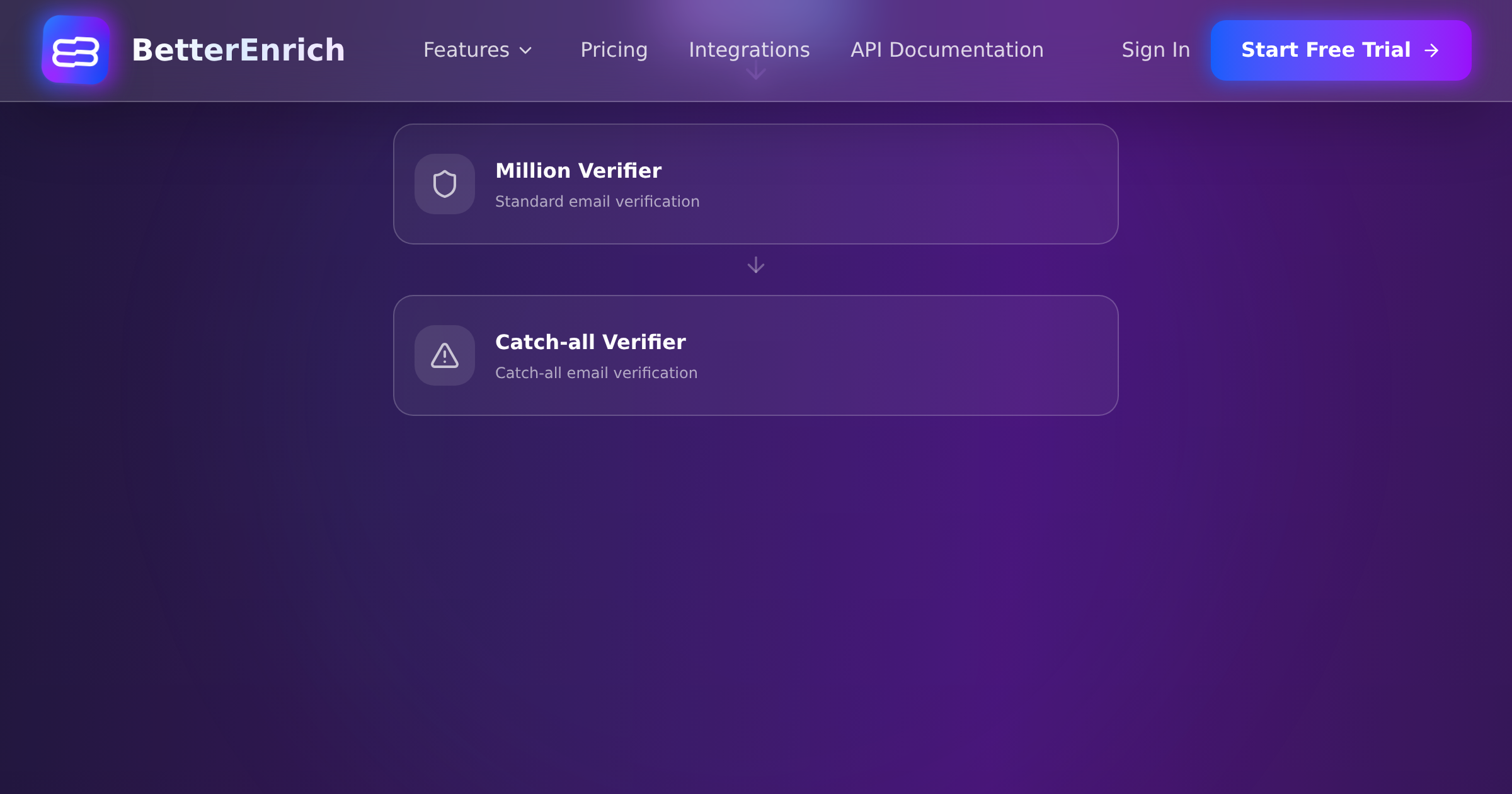
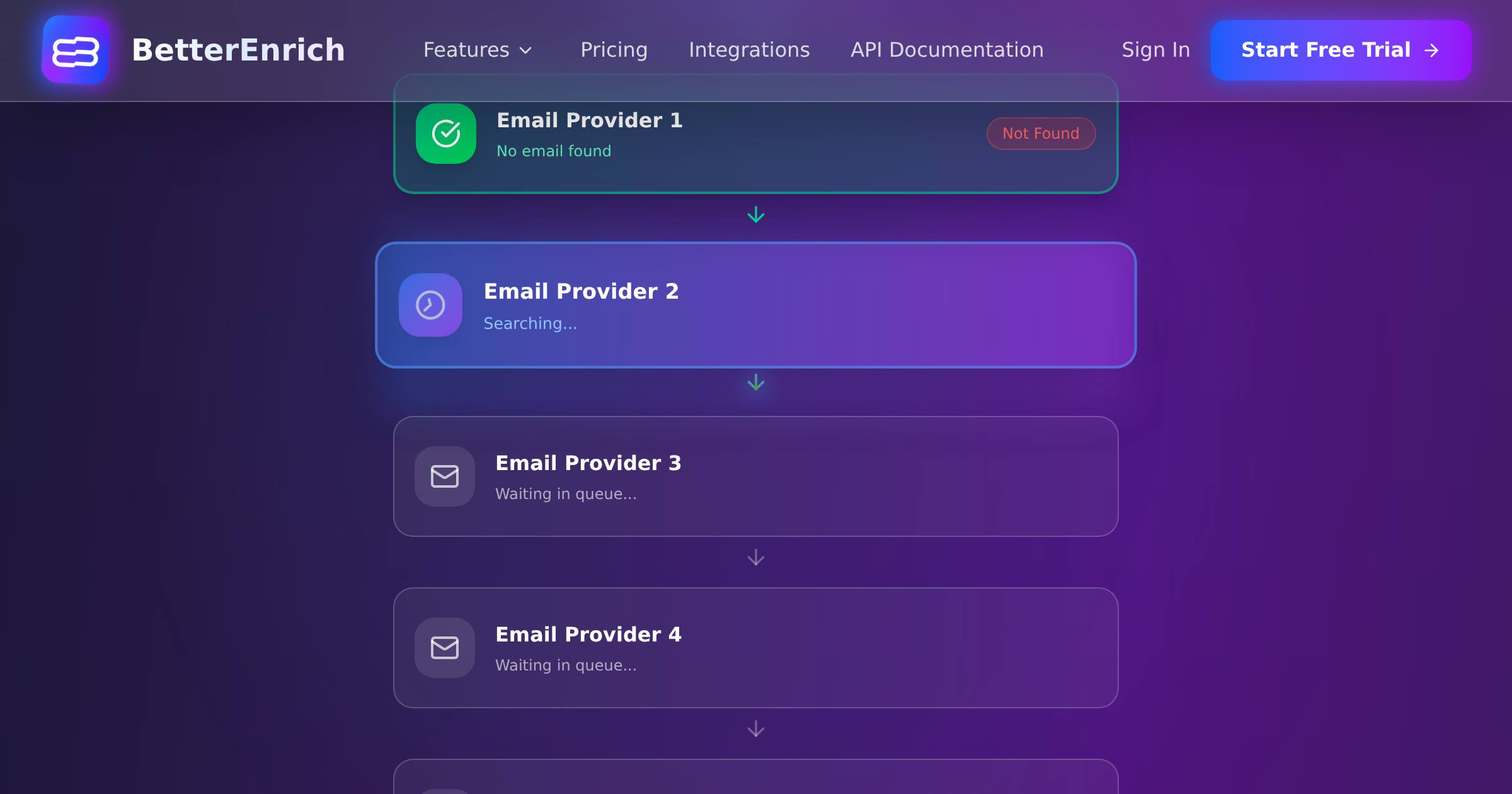
The webhook sends the lead data to your enrichment platform. BetterEnrich queries 17+ data sources in a waterfall cascade to find additional information:
- Verified work email (confirming the submitted email is deliverable)
- Mobile phone number (with 3-step verification)
- Company size, revenue, and industry
- Technology stack
- Recent funding or growth signals
Waterfall enrichment takes 30-90 seconds for async processing. For real-time routing, this is fast enough. The lead is enriched before the prospect even finishes reading your thank-you page.
Step 2: Score the Lead (instant)
With the enriched data in hand, your lead scoring model runs automatically. The firmographic data (company size, industry, revenue) determines fit score. Any existing behavioral data (pages visited, content downloaded) contributes to the intent score.
The combined score determines routing priority:
- Score 25+: route to an AE for immediate follow-up
- Score 15-24: route to an SDR for qualification
- Score below 15: route to automated nurture sequence
Step 3: Route to the Right Rep (instant)
Based on the enriched data, the lead is routed to the appropriate rep. Routing rules can use any enriched field:
- Geography: route to the rep who covers the prospect's region
- Company size: enterprise leads go to enterprise AEs, mid-market to mid-market reps
- Industry: vertical specialists get leads from their industry
- Named account: if the company is on a rep's target account list, it goes directly to them
The rep receives an alert (Slack notification, email, CRM task) with the full enriched profile: contact name, title, verified phone, company details, tech stack, and lead score. Everything they need for a great conversation is right there.
Step 4: Respond (within 5 minutes)
The rep picks up the phone and calls the verified mobile number. Or sends a personalized email using the enriched data. The prospect submitted their form 3 minutes ago. They are still thinking about the problem. Your rep is the first call they receive.
That 78% first-responder win rate is now working in your favor.
Technical Implementation
Webhook Architecture
The webhook endpoint needs to respond quickly and process later. Best practice: your webhook receives the form data, acknowledges receipt immediately (200 response), and then processes the enrichment asynchronously.
Implementation pattern:
- Form submission fires webhook to your middleware (Zapier, Make, or custom endpoint)
- Middleware sends enrichment request to BetterEnrich API
- BetterEnrich processes the waterfall and returns results via callback or polling
- Middleware writes enriched data to CRM
- CRM automation scores and routes the lead
- Notification fires to the assigned rep
Implement retry logic with exponential backoff (1 second, 2 seconds, 4 seconds) in case the enrichment API is slow to respond. HTTPS is required for webhook security. Log everything: payloads, processing times, errors, and API responses.
CRM Integration
The enriched data needs to flow into the right CRM fields automatically. Map enrichment fields to CRM properties before going live:
- Enriched mobile phone goes to Phone field
- Company size goes to Number of Employees
- Industry goes to Industry field
- Tech stack goes to a custom Technology field
- Lead score gets calculated and stored
Test the integration thoroughly with sample data before enabling it for production leads. A mapping error that puts phone numbers in the email field or industry in the title field will cause chaos.
Routing Rules
Configure routing rules in your CRM or using a routing tool (Chili Piper, LeanData, or native CRM round-robin). The rules should use enriched data fields for intelligent assignment.
Example routing logic:
- If company size greater than 500 AND industry is SaaS: route to Enterprise AE team
- If company size 50-500 AND region is West Coast: route to West Mid-Market SDR
- If company is on named account list: route to assigned account owner
- If score below 15: route to marketing nurture
Enriching Different Inbound Sources
The same enrichment workflow applies to multiple inbound sources beyond website forms:
Webinar registrations: enrich registrants before the webinar so you can prioritize follow-up based on fit score.
Content downloads: enrich every gated content download to distinguish between students and buyers.
Free trial signups: enrich trial users to identify which ones are from companies that match your ICP and warrant sales-assisted onboarding. This is the product-led growth use case where enrichment identifies high-value free users.
Chat conversations: if a website visitor starts a live chat, trigger enrichment on whatever identifying information they provide (email, company) so the chat agent has context instantly.
What Enrichment Data Tells You About Inbound Quality
Not all inbound leads are created equal. Enrichment data helps you separate signal from noise:
High-quality signals: company matches ICP (right size, industry, geography), contact is a decision-maker (director+ title), company uses compatible technology, recent funding or growth signals.
Low-quality signals: personal email domain (Gmail, Yahoo), company is too small or too large for your product, contact title suggests student or job-seeker, company in an unsupported geography.
By enriching every inbound lead immediately, you can make these quality distinctions in seconds rather than days. High-quality leads get immediate attention. Low-quality leads get automated nurture. Your team's time is invested where it will generate the most return.
Measuring the Impact
Track these metrics before and after implementing real-time enrichment:
- Average speed to first response (target: under 5 minutes for high-score leads)
- Lead-to-meeting conversion rate (expect 30-50% improvement)
- Lead-to-opportunity conversion rate
- Percentage of leads with complete enrichment data
- Rep time spent on manual research per lead (should drop to near zero)
The companies that implement real-time enrichment and routing consistently report significant improvements in conversion rates. The combination of faster response times, better routing accuracy, and richer conversation context creates a compound effect that basic form handling cannot match.
The Bottom Line
Real-time enrichment turns inbound leads from raw form data into fully profiled, scored, and routed opportunities within seconds. The technical implementation is straightforward: webhook, enrichment API, CRM integration, routing rules. The impact is dramatic: faster response times, better qualification, and higher conversion rates. If 78% of deals go to the first responder, real-time enrichment is how you make sure that first responder is you.