You need to reach the VP of Sales at a target account. You know their name. You know their company. Now you need their work email and mobile number. How do you actually find that information?
There are dozens of approaches, from high-tech enrichment platforms to old-school manual research. Each method has trade-offs in speed, accuracy, cost, and coverage. This guide breaks down every major contact discovery method, compares them honestly, and helps you pick the right approach for your team.
Method 1: Data Enrichment Platforms
Enrichment platforms are the dominant approach for B2B contact discovery in 2026. You provide a name and company (or just a company and title), and the platform returns verified contact information.
Single-Source Platforms
Tools like ZoomInfo, Apollo, Lusha, and Clearbit each maintain their own proprietary database. You query the database, and if the contact is there, you get the result. Simple and fast.
The catch: single-source coverage tops out at 50-70%. No single database has every B2B professional. So for every 10 contacts you look up, 3-5 come back empty. That is a significant gap when you are trying to build a comprehensive prospect list.
Pricing varies wildly. ZoomInfo starts at $15K-25K per year for enterprise contracts. Apollo is $49-119 per month per user. Lusha uses a credit-based model. Clearbit was acquired by HubSpot and is now bundled into their ecosystem.
Waterfall Enrichment Platforms
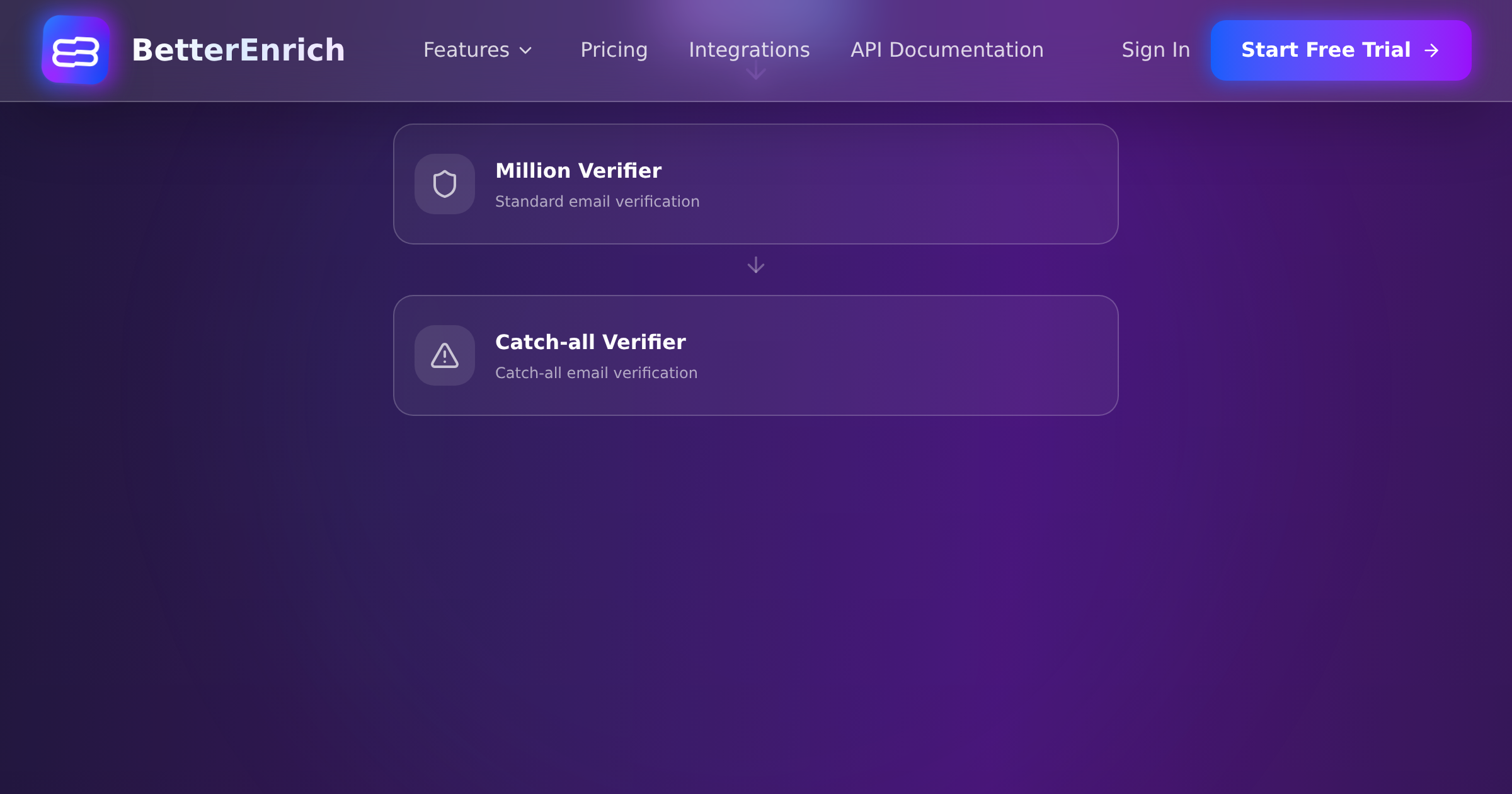
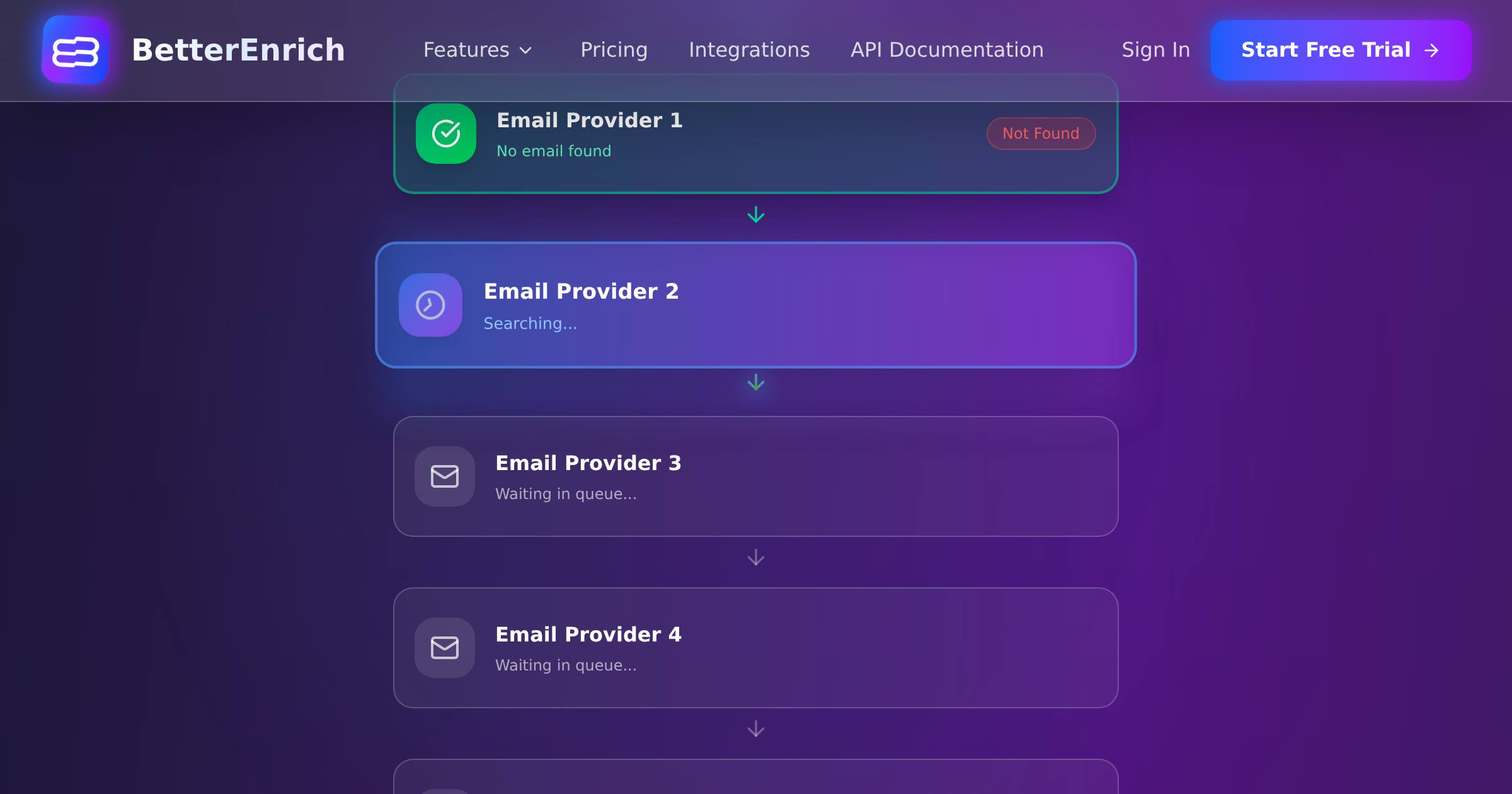
Waterfall platforms solve the coverage problem by cascading your query through multiple data sources. If Provider A does not have the contact, the system automatically queries Provider B, then C, and so on through 15-17+ providers.
Coverage jumps to 85-95%. The trade-off is that waterfall queries take longer (30-90 seconds for async processing) and cost more per lookup. But when you factor in the pay-per-valid pricing that platforms like BetterEnrich use, the effective cost per valid contact is often lower than single-source tools because you are not paying for empty results.
Key players in waterfall enrichment: BetterEnrich (17+ sources, pay-per-valid), Clay (100+ data sources, DIY orchestration), FullEnrich (15+ vendors), and BetterContact.
Method 2: LinkedIn and Social Platforms
LinkedIn Sales Navigator is the go-to tool for identifying B2B contacts. With 900+ million members, the coverage is unmatched. But LinkedIn deliberately restricts access to contact information. You can see names, titles, and companies, but not email addresses or phone numbers.
LinkedIn enrichment comes in several forms:
- Chrome extensions (Lusha, Kaspr, Seamless.AI) that overlay contact data on LinkedIn profiles
- Sales Navigator InMail for direct messaging (but expensive credits and low response rates)
- LinkedIn connection requests with short personalized messages
- Exporting Sales Navigator lists and enriching them through a separate platform
The LinkedIn plus enrichment combination is the most common workflow: find the prospect on LinkedIn, then use an enrichment platform to get their email and phone.
Method 3: Email Pattern Guessing
This is the budget approach. Most companies use predictable email formats: firstname.lastname@company.com, first@company.com, firstlastname@company.com, etc. If you know the pattern, you can guess the email address.
Tools like Hunter.io identify the email pattern for a given domain by finding known email addresses and detecting the format. Then you can construct the likely email for any person at that company.
The accuracy is roughly 60% without verification. Many guessed emails are correct, but a significant portion bounce. You absolutely need to run verification after guessing to avoid destroying your sender reputation.
This method works best as a supplement to enrichment, not a replacement. When your enrichment platform cannot find a contact, pattern guessing plus verification is a reasonable fallback.
Method 4: Company Website and Public Data
Some contacts are hiding in plain sight. Company websites often list leadership teams, advisory boards, and department heads on their About or Team pages. Press releases mention executive names. Conference speaker lists reveal industry contacts.
Manual extraction from these sources is slow (maybe 5-10 contacts per hour) but the data is usually current. If someone is listed on the company website as VP of Sales, that information is probably accurate.
The limitation is that websites give you names and titles but rarely email addresses or phone numbers. You still need enrichment or pattern guessing to get contact details.
Method 5: Industry Events and Conferences
Conferences publish speaker lists and attendee directories. Trade shows have exhibitor lists. Webinars have registration data (if you host them). These are high-intent contact sources because attendees have self-selected into your industry or topic area.
The data is often in formats that need enrichment: you might get a name and company but not a direct phone number. Running event attendee lists through waterfall enrichment is a proven way to turn conference contacts into actionable prospect data.
Method 6: Intent-Based Discovery
Instead of starting with a contact and finding their data, intent-based discovery starts with a buying signal and finds the contacts behind it. Third-party intent data providers like Bombora and 6sense identify companies showing research behavior in your category, then you use enrichment to find the decision-makers at those companies.
This method finds contacts you did not even know you should be looking for. It is proactive rather than reactive. Intent data identifies accounts 6-9 months before they contact vendors directly, giving you a massive head start.
Method 7: Referral Mining
Your existing customers know other people in your ICP. Referral programs, customer advisory boards, and strategic partnership networks can generate warm introductions that bypass the cold outreach problem entirely.
The contact discovery here is relationship-based: ask your champion at Company A to introduce you to their counterpart at Company B. Then enrich the referred contact with additional data points for personalized outreach.
Comparing the Methods
Here is how the major methods stack up across key criteria:
Coverage: Waterfall enrichment wins at 85-95%, followed by single-source enrichment at 50-70%, LinkedIn at 80%+ for identification (but no contact details), and pattern guessing at roughly 60% accuracy.
Speed: Single-source enrichment is fastest (instant results). Waterfall takes 30-90 seconds per contact. LinkedIn browsing is manual and slow. Pattern guessing is fast but requires verification afterward.
Cost: Pattern guessing and public data are cheapest. Single-source enrichment is mid-range ($0.10-0.50 per contact). Waterfall enrichment is competitive when using pay-per-valid pricing. Enterprise platforms like ZoomInfo are most expensive.
Accuracy: Waterfall enrichment with built-in verification is highest accuracy (99% claimed for platforms like BetterEnrich). Single-source varies by provider (hard bounce rates of 0.9-11.2% across tools). Pattern guessing without verification is lowest.
The Recommended Approach
For most B2B sales teams, the optimal contact discovery workflow combines multiple methods:
- Start with LinkedIn Sales Navigator to identify prospects by name, title, and company
- Run the list through waterfall enrichment (BetterEnrich) for verified emails and mobile numbers at 85-95% coverage
- For the 5-15% not found, try email pattern guessing with verification as a fallback
- Layer intent data on top to prioritize which contacts to reach out to first
- Use company website and event data to supplement for specific high-value targets
This multi-method approach maximizes coverage while keeping accuracy high. The waterfall enrichment layer does the heavy lifting, and the supplementary methods fill in the gaps.
The Bottom Line
No single contact discovery method is sufficient on its own. The best results come from combining LinkedIn for identification with waterfall enrichment for verified contact data and intent signals for prioritization. That combination gives you the broadest coverage, the highest accuracy, and the most actionable data for actually reaching the people you need to talk to.