FullEnrich vs. BetterEnrich: Comparing Waterfall Enrichment Platforms
FullEnrich and BetterEnrich are both waterfall enrichment platforms. Here is how they compare on data sources, verification quality, pricing, and which scenarios favor each tool.

FullEnrich and BetterEnrich are both waterfall enrichment platforms. Here is how they compare on data sources, verification quality, pricing, and which scenarios favor each tool.

A structured scorecard replaces sales pitch impressions with objective vendor comparison. Here are 20 criteria across five categories for evaluating enrichment tools.

Every enrichment vendor claims the best coverage and accuracy. A controlled bake-off with your actual data reveals which one truly performs for your ICP.

European data coverage requires specialized attention. Cognism offers deep EMEA coverage with phone-verified numbers. BetterEnrich provides global waterfall enrichment. Here is how they compare.

Lusha enriches one LinkedIn profile at a time. BetterEnrich enriches thousands through API-driven waterfall logic. Here is how each model fits different sales team workflows.

The gap between quoted enrichment pricing and actual cost catches most teams off guard. Here is how to calculate your true per-contact cost across every pricing model.

Clay lets you build custom waterfall workflows across 100-plus data sources. BetterEnrich delivers turnkey waterfall enrichment through a single API. Here is how to choose.

HubSpot acquired Clearbit, creating native enrichment for HubSpot users. For everyone else, CRM-agnostic alternatives like BetterEnrich offer higher coverage and more flexible pricing.

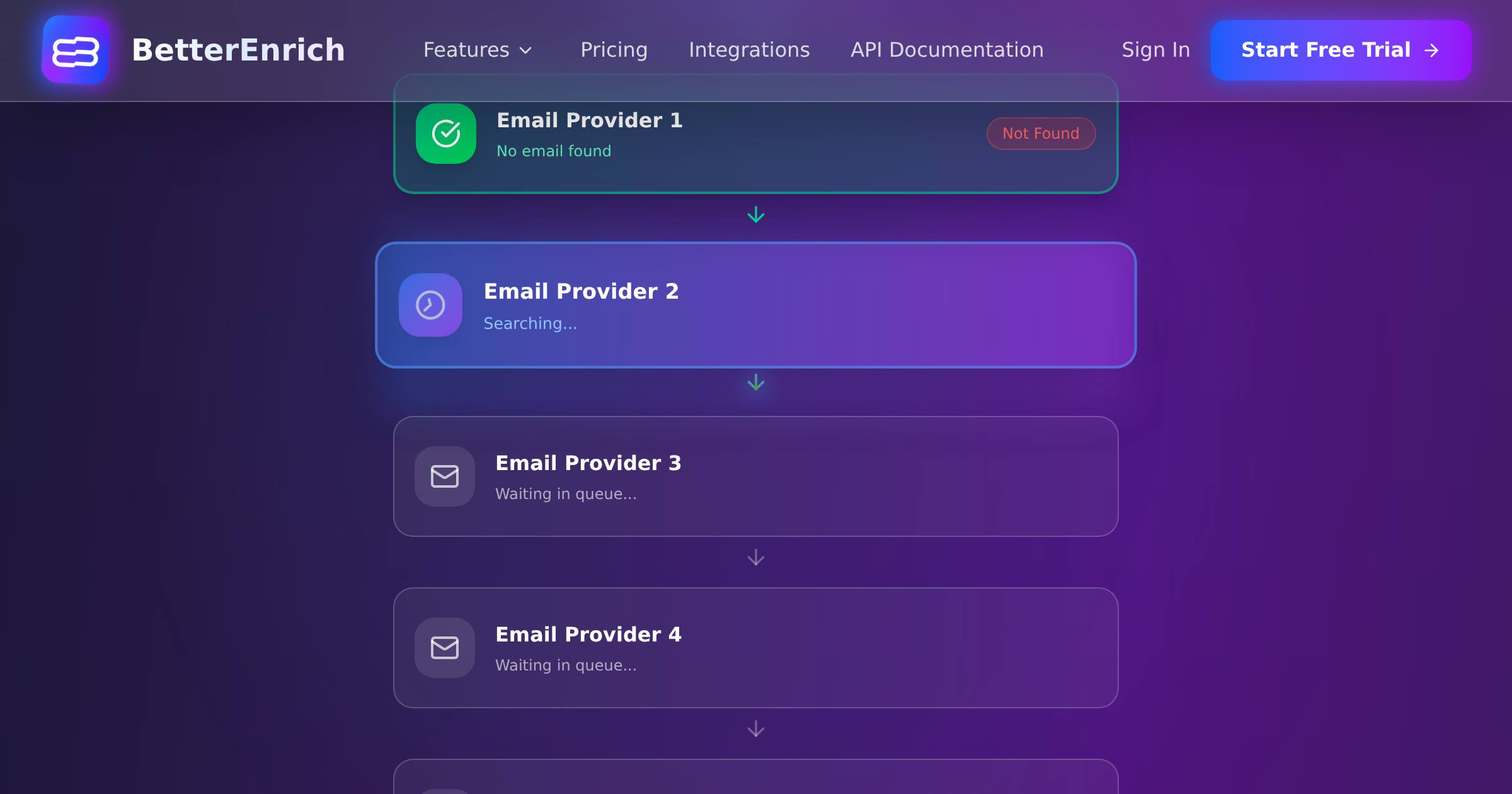
Apollo gives you one large database. BetterEnrich cascades through 17 or more sources. Here is how to decide which enrichment model delivers more value for your team.

ZoomInfo starts at $15K per year and many teams pay for features they never use. Here are 10 alternatives that deliver the data you actually need at a fraction of the cost.