There is a window in every B2B purchase where the buyer is researching solutions but has not contacted any vendors yet. They are reading blog posts, comparing tools on review sites, downloading whitepapers, and building internal business cases. During this window, they are invisible to most sales teams.
The companies that consistently win are the ones that spot this early research activity and start engaging before competitors even know the opportunity exists. Research suggests that first-mover advantage delivers a 50% higher win rate. Being first to the conversation is not just a nice advantage. It is often the deciding factor.
Here is how to build an early warning system that catches in-market accounts months before they reach out.
The Buying Timeline Most Teams Miss
Intent data identifies accounts 6-9 months before they contact vendors directly. Think about that timeline. Half a year before a prospect fills out your demo form, they are already researching your category. They are reading content, comparing solutions, and forming opinions. By the time they reach out to you, they have often already narrowed their shortlist.
Most sales teams only engage when the prospect raises their hand: a demo request, a pricing inquiry, a sales call. By that point, competitors who detected the early research activity have already had conversations, shared relevant content, and built relationships. The late-arriving vendor starts at a disadvantage.
The Three Signal Sources
Third-Party Intent Data
This is the primary tool for identifying in-market accounts early. Bombora operates the largest cooperative intent network, tracking content consumption across 5,000+ publisher websites across 12,000+ topics. When employees at a company start consuming a disproportionate amount of content about a specific topic, Bombora flags that company as showing intent.
The key word is disproportionate. Bombora compares current behavior against a baseline. A company that always reads cybersecurity content would not trigger a cybersecurity intent signal. But a manufacturing company that suddenly starts reading cybersecurity content would, because the spike is above their normal baseline.
6sense takes a different approach, using AI and predictive models to analyze buying patterns and predict which accounts are entering buying cycles. Their models consider hundreds of signals beyond just content consumption, including web activity, technographic changes, and hiring patterns.
First-Party Engagement Signals
Your website analytics, content engagement metrics, and marketing automation data capture signals from accounts that have already found you. The key is aggregating these signals at the account level rather than looking at individual page views in isolation.
A single blog post visit means nothing. But when three people from the same company visit your website in the same week, read your comparison pages, and download your ROI calculator, that account is showing serious buying interest.
Account-level engagement scoring aggregates individual behaviors into a company-level signal. Most marketing automation platforms (HubSpot, Marketo, Pardot) support this with account scoring features.
Technographic Change Signals
When a company adopts a new technology, drops an existing vendor, or changes their infrastructure, it creates buying opportunities for adjacent products. Monitoring these changes gives you a trigger to reach out at exactly the right moment.
For example: a company that migrates from Salesforce Classic to Lightning is going to re-evaluate every integration and add-on. A company that drops its data enrichment provider is actively looking for a replacement. A company that adopts a new marketing automation platform needs everything that integrates with it.
Building Your Early Warning System
Step 1: Define Your Intent Topics
Work with your intent data provider to map relevant topics. Be specific enough to capture genuine buying signals without broad enough to drown in noise.
For a data enrichment company, relevant topics might include: data enrichment, contact data quality, email verification, B2B data providers, CRM data management, sales intelligence tools, waterfall enrichment, and lead enrichment. Each topic captures a slightly different angle on the buying journey.
Step 2: Set Up Account-Level Scoring
Create a composite score for each account that combines:
- Third-party intent signal strength (0-10 based on topic relevance and surge magnitude)
- First-party engagement score (0-10 based on website visits, content downloads, email engagement)
- Firmographic fit score (0-10 based on ICP match)
- Technographic fit score (0-5 based on compatible or competitive technology)
Total possible score: 35 points. Set thresholds: 25+ is a hot account requiring immediate action. 15-24 is a warm account for prioritized outreach. Below 15 stays in nurture.
Step 3: Automate the Enrichment Response
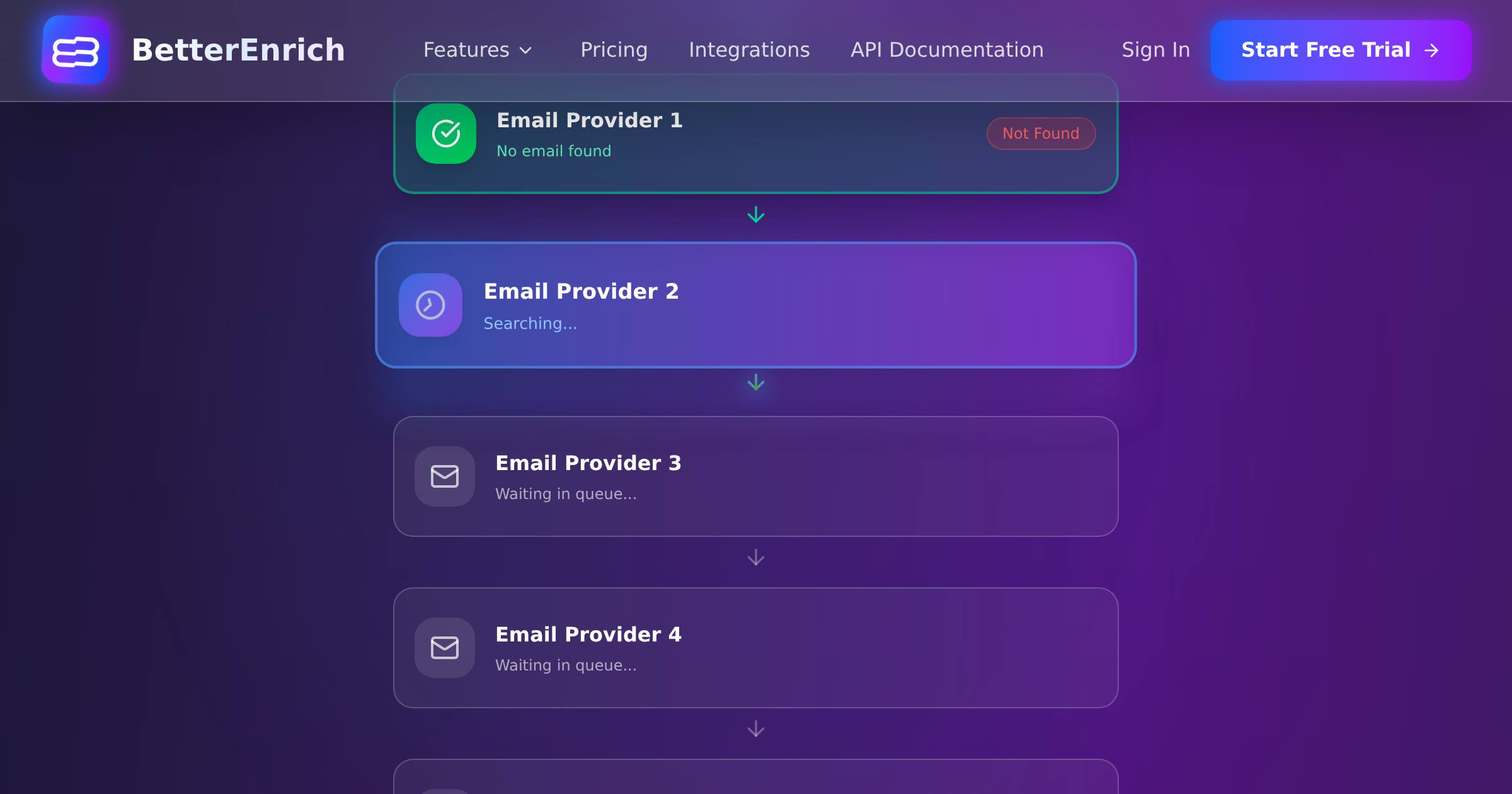
When an account crosses your hot threshold, trigger automatic enrichment of the buying committee. BetterEnrich can waterfall-enrich the key contacts at the triggered account within minutes, returning verified work emails and mobile numbers for the decision-makers you need to reach.
The speed of this enrichment matters. A hot intent signal is perishable. If it takes your team three days to manually research and find contact data, you have lost most of the first-mover advantage. Automated enrichment triggered by intent signals keeps the response time measured in minutes, not days.
Step 4: Route and Act
Hot accounts get routed to account owners immediately with the intent context: which topics the account is researching, how strong the signal is, and which contacts were enriched. The rep should be reaching out within 24 hours of the signal with a message that is topically relevant to the research behavior.
Warm accounts get added to targeted nurture sequences that align with their intent topics. If they are researching data quality, send them your data quality content. If they are researching sales tools, send comparison guides and ROI calculators.
The Enrichment-Intent Feedback Loop
The most sophisticated programs create a feedback loop between intent data and enrichment:
- Intent signal fires for Account X (researching data enrichment)
- Automatic enrichment finds 5 buying committee members with verified contacts
- Rep reaches out with topically relevant outreach to all 5 contacts
- Marketing runs targeted ads to the same account for reinforcement
- Track which contacts engage and adjust outreach intensity based on response
- If intent signal decays (account stops researching), reduce outreach and move to nurture
- If intent signal strengthens (more people researching, more topics), escalate to executive outreach
This loop ensures you are investing effort proportionally to buying signal strength. Hot accounts get maximum attention. Cooling accounts get pulled back before you annoy them.
Measuring Your Early Warning System
Track these metrics monthly to validate that your system is working:
- Detection rate: what percentage of closed-won deals showed intent signals before first contact? (Target: 60%+ should have been flagged)
- First-mover rate: what percentage of intent-flagged deals did you engage first? (Track against competitor engagement timing)
- Intent-to-pipeline conversion: what percentage of hot accounts enter your pipeline within 90 days? (Benchmark: 10-20%)
- False positive rate: what percentage of hot accounts turn out to be irrelevant or unresponsive? (Should decrease over time as you refine topics and thresholds)
- Time-to-engagement: how quickly after an intent signal does the first outreach happen? (Target: under 48 hours)
Common Mistakes
Treating intent signals as inbound leads. They are not. The prospect did not contact you. They showed research behavior. Your outreach should be helpful and relevant, not assumptive. Do not open with a pitch. Open with insight related to the topic they are researching.
Acting on stale signals. Intent signals have a 2-4 week shelf life. A signal from last month is interesting context but not an outreach trigger. Set up decay rules that downgrade account scores as signals age.
Ignoring enrichment quality. A hot intent signal is useless if you cannot reach the buying committee. Pair intent data with waterfall enrichment so you have verified contact data for the right people at triggered accounts. The 85-95% coverage from BetterEnrich ensures you find nearly every committee member, not just the easy ones.
Not closing the loop. Track which intent-flagged accounts eventually became customers and which did not. Use this data to refine your topic selection, scoring thresholds, and outreach playbooks.
The Competitive Advantage
Most of your competitors are still waiting for prospects to come to them. They respond to demo requests and inbound inquiries. They work their existing pipeline. They run outbound based on static lists.
An early warning system powered by intent data and automated enrichment puts you 6-9 months ahead of that reactive approach. You are having conversations while your competitors are waiting for form fills. You are building relationships while they are sending cold emails to stale lists.
That head start compounds over time. The accounts you engage early are less likely to evaluate competitors at all. The relationships you build during the research phase carry through the buying process. And the win rate advantage of being first to the conversation is real, measurable, and significant.