Every outbound sales effort starts with a list. The quality of that list determines everything that follows. A tight, well-enriched list of 200 contacts who match your ICP will outperform a sloppy list of 2,000 random names every single time. Enriched data drives 66% higher conversion rates and 38% shorter sales cycles, so getting the list right at the beginning pays dividends through the entire pipeline.
Start with Your Ideal Customer Profile
Before you touch any tool, define who you are looking for. The ICP is a description of the company (not the individual) that gets the most value from your product. If you have existing customers, analyze your best ones. What do they have in common?
The core ICP dimensions, all of which can be populated through enrichment:
- Industry: Which verticals see the fastest adoption and highest retention? Be specific. "Technology" is too broad. "B2B SaaS companies with 50 to 500 employees" is better.
- Company size: Usually measured by employee count. Revenue ranges also work but are harder to verify through enrichment.
- Geography: Where are your customers? Where can your sales team reasonably sell and support?
- Technology stack: What tools does your ideal customer already use? This is especially powerful if your product integrates with or replaces specific tools.
- Growth signals: Are you targeting fast-growing companies (recent funding, hiring surges) or established players?
Step 1: Source Your Initial Company List
You need a list of companies that match your firmographic criteria before you can find individual contacts at those companies. Several approaches work:
LinkedIn Sales Navigator: Search by company size, industry, geography, and growth rate. Build a company list and save it. This is the most popular starting point because LinkedIn has the broadest company coverage.
Industry directories: Trade associations, industry databases, and vertical-specific directories often list companies you would miss on LinkedIn. Manufacturing, healthcare, and construction companies are better represented in industry directories than on LinkedIn.
Competitor customers: If you sell a CRM integration, you can use technographic data to find all companies using that CRM. Technographic providers reveal which companies use specific tools, giving you a pre-qualified list based on technology fit.
Crunchbase and similar databases: For startups and funded companies, Crunchbase lets you filter by funding stage, industry, and size. This is excellent for targeting companies with recent capital to spend.
Target 100 to 200 companies for your initial list. You will be finding 2 to 5 contacts per company, so 100 companies yields 200 to 500 individual prospects.
Step 2: Identify Your Buyer Personas
At each target company, which roles should you contact? Most B2B deals involve 6 to 10 decision-makers. You do not need to reach all of them initially, but you should target at least 2 to 3 contacts per account to increase your chances of finding a receptive entry point.
Define your buyer personas by:
- Primary persona: The person with the problem your product solves. Usually a functional leader (VP of Sales, Director of Marketing, Head of Engineering).
- Secondary persona: The economic buyer who controls budget. Often one level above the primary persona.
- Influencer persona: Someone who does not make the final decision but whose opinion carries weight. Often a power user or technical evaluator.
Step 3: Enrich with Contact Data
Now comes the enrichment step that turns company targets into reachable individuals. Upload your company list to your enrichment platform with the persona criteria: company name, target job titles, and seniority level.
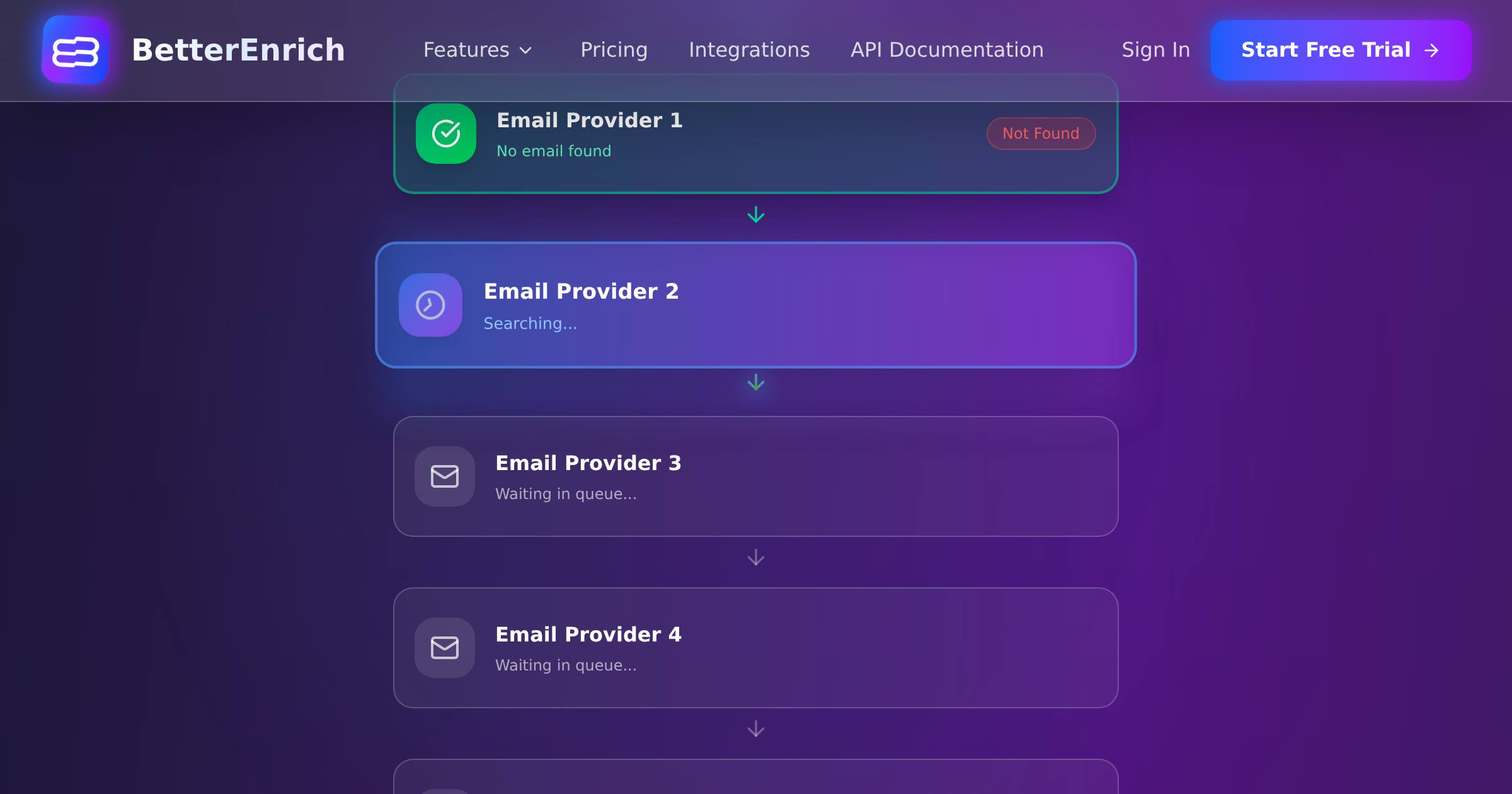
A waterfall enrichment platform will cascade through 17 or more data sources to find contact details for individuals matching your criteria at each company. For each contact, you want:
- Verified work email: This is your primary outreach channel. Verification should confirm the email is deliverable, not just that it follows a valid format. Target: under 2% bounce rate on your final list.
- Mobile phone number: For teams that include cold calling in their outreach. Three-step verification (format, line-type, location) ensures you are calling a mobile that belongs to the right person.
- Job title and seniority: Confirm the enriched title matches your target persona. Title data can be stale, so cross-reference with LinkedIn if possible.
- Company firmographics: Employee count, industry, revenue range, headquarters location. This data confirms the company still matches your ICP (companies change over time).
With waterfall enrichment, expect 85 to 95% coverage on emails and lower but meaningful coverage on phone numbers. Single-source tools will return 50 to 70% coverage, leaving significant gaps.
Step 4: Verify and Clean the List
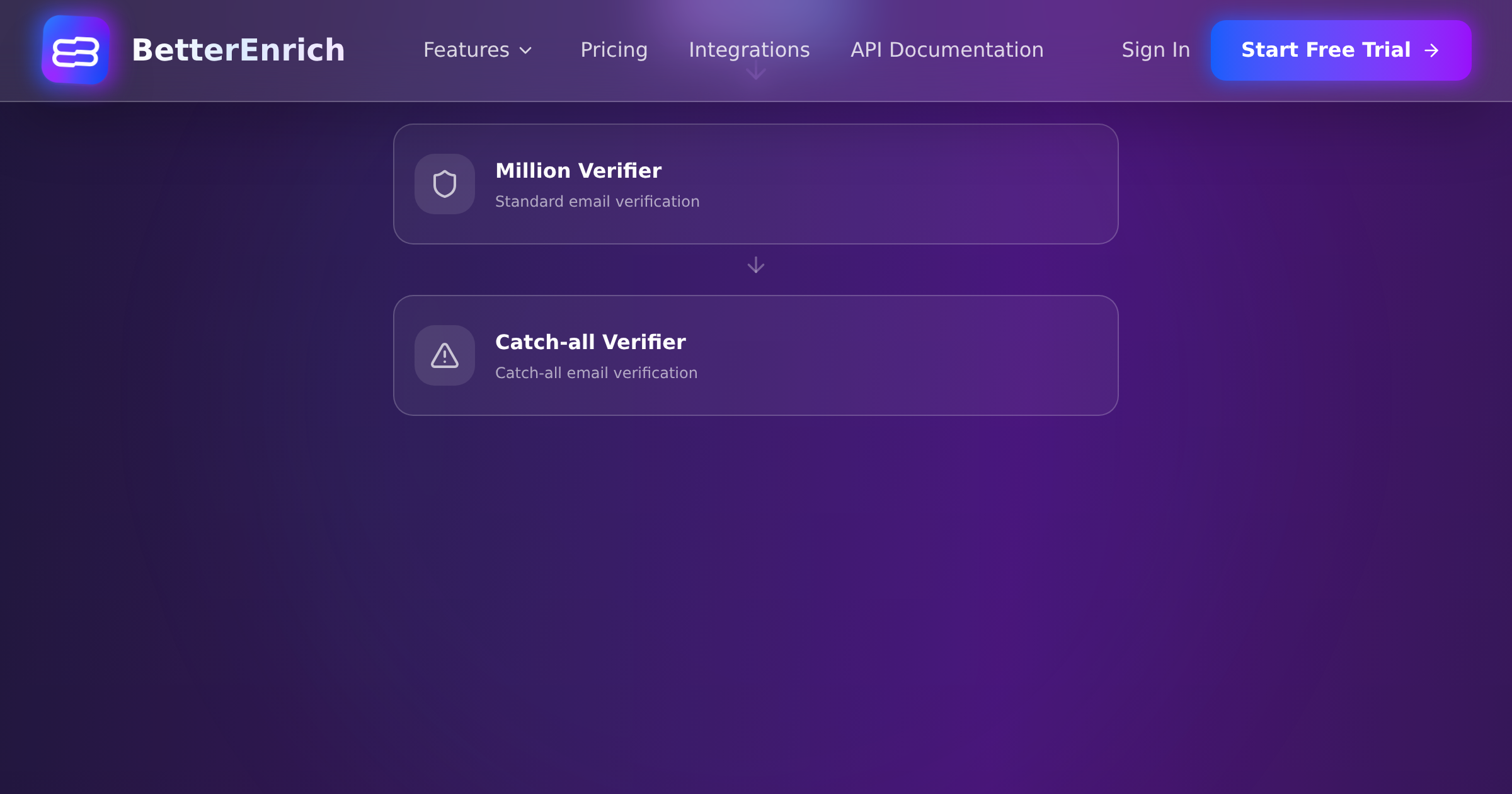
Even with enrichment, verification is a separate and critical step. Run your enriched email list through email verification to catch any addresses that have become invalid between the time of enrichment and now. Data decays at 2.1% per month, so even a list enriched last month has degraded slightly.
Cleaning steps:
- Remove duplicates: Use email as the primary dedup key. If two enrichment records return the same email, merge the records and keep the most complete data.
- Remove role-based emails: Addresses like info@, sales@, and support@ are not individual contacts. These should be excluded from your outreach list.
- Flag catch-all domains: Catch-all domains accept all emails regardless of whether the mailbox exists. Standard verification cannot confirm individual addresses at these domains. You can still include them in outreach but monitor bounce rates closely.
- Validate phone numbers: Confirm line-type (mobile vs. landline). Remove or deprioritize landlines if your team does cold calling.
Step 5: Score and Prioritize
Not every contact on your list is equally valuable. Score them based on how closely they match your ICP and how many buying signals they show.
A simple scoring approach:
- A-tier (work first): Perfect ICP fit (right size, industry, and tech stack), contact is in your primary buyer persona, and the company shows a recent trigger event (funding, leadership change, hiring surge).
- B-tier (work next): Good ICP fit, contact matches a buyer persona, no obvious trigger event.
- C-tier (work last): Partial ICP fit or the contact is an influencer rather than a decision-maker.
Your A-tier contacts should get the most personalized, multi-channel outreach. B-tier gets solid but templated sequences. C-tier gets lighter-touch, email-only sequences.
Step 6: Load into Your CRM and Sequence Tool
Import the scored and verified list into your CRM with all enriched fields mapped to the right custom fields. Then segment by score tier and assign to outreach sequences.
For each contact, your CRM record should include: name, verified email, phone number (if available), company, title, enrichment source, enrichment date, ICP score, and any relevant trigger events or notes.
The enrichment date field is important because it tells you when to re-enrich. Data decays at 22.5% per year, so any contact enriched more than 90 days ago should be refreshed before outreach.
Expected Outcomes
Starting from 100 to 200 target companies, a well-executed enrichment workflow produces:
- 200 to 500 individual prospects with verified contact data
- 85 to 95% email coverage (waterfall enrichment)
- Under 2% bounce rate on verified emails
- 40 to 60% mobile phone coverage for calling-oriented teams
- Complete firmographic data on every record for segmentation and personalization
Contrast this with manual list building, where an SDR researches 5 to 10 contacts per hour. Building a list of 500 contacts manually would take 50 to 100 hours of SDR time. At $25 per hour, that is $1,250 to $2,500 in labor cost alone, with no guarantee of accuracy. Enrichment processes the same volume in minutes at a fraction of the cost.
Maintaining Your List Over Time
A prospect list is not a one-time asset. B2B contact data decays at 2.1% per month. Job title changes affect 65.8% of contacts within 12 months. After three months, your list has degraded enough to affect outreach performance.
Set up a refresh cadence: re-enrich contacts that are more than 90 days old, re-verify emails before any major campaign, and remove contacts whose companies no longer match your ICP (company was acquired, shrank below your size threshold, or changed industries). Treat your prospect list as a living database, not a static spreadsheet, and the investment in building it will keep paying returns for quarters rather than weeks.