Cold calling gets a bad reputation, and honestly, most of it is deserved. The way most teams do it is broken. They are calling switchboard numbers, getting gatekeepers, leaving voicemails that nobody listens to, and burning through hundreds of dials to get a handful of conversations.
But here is what the data actually shows: cold calling still works. It just works very differently than it did five years ago. The teams crushing it in 2026 are not making more calls. They are making better calls, to the right numbers, armed with the right data.
The single biggest variable? Whether you are calling a verified mobile number or a switchboard line. That one factor changes everything.
The State of Cold Calling: What the Numbers Say
SDRs average just 4.4 quality conversations per day. That is down 45% since 2014. Think about that. Despite better tools, more automation, and bigger tech stacks, reps are having fewer meaningful conversations than they did a decade ago.
Why? Several factors. More people work remotely, so office lines ring empty desks. Gatekeepers have gotten better at screening. Caller ID means unknown numbers get sent to voicemail. And the sheer volume of sales calls has trained everyone to be suspicious of unfamiliar callers.
The average SDR makes 35.9 calls per day as part of their 94.4 total activities. Most of those calls go to voicemail, reach a gatekeeper, or hit a disconnected number. The math is brutal: 35 dials to get 4-5 conversations to maybe book 1 meeting.
But teams using verified mobile numbers report connect rates 3-5x higher than those calling switchboard or general office lines. That changes the math entirely.
Why Mobile Numbers Are the Gold Standard
When you call a mobile number, you reach the person directly. No switchboard. No gatekeeper. No receptionist asking you to hold while they check if the person is available (they are always mysteriously unavailable).
Mobile numbers go where the person goes. With remote and hybrid work now standard, office lines are increasingly useless. The VP of Sales you are trying to reach might work from home three days a week. Their office phone sits on an empty desk. But their mobile is always with them.
The connect rate difference is massive. Industry data consistently shows 3-5x higher connect rates on verified mobile numbers versus switchboard or office lines. If your team is making 35 calls a day and connecting on 12% of them (about 4 conversations), switching to verified mobiles could push that to 36-60% connect rates. Same number of dials, but 3-5x more actual conversations.
The Problem: Not All Phone Data Is Equal
Here is where most teams go wrong. They buy phone data from a provider, load it into their dialer, and start calling. Then they discover that half the numbers are landlines, a quarter are disconnected, and the rest are a mix of VoIP lines and genuinely reachable mobiles.
Phone number changes affect 42.9% of contacts within one year. That means nearly half the phone numbers in your database right now could be wrong if they have not been verified recently.
And there is a critical distinction most providers gloss over: the difference between a direct dial and a verified mobile. A direct dial might be an office desk phone (useless for remote workers). A verified mobile has been confirmed as an actual mobile line, currently in service, belonging to the right person.
Three-Step Phone Verification
Serious enrichment platforms verify phone numbers across three dimensions:
Step 1: Format Validation
Is the number formatted correctly for its country? Does it have the right number of digits? Is the country code valid? This catches obvious junk data: malformed numbers, test numbers, and garbage entries that should never have been in the database.
Step 2: Line-Type Detection
This is the critical step. Line-type detection determines whether a number is a mobile phone, a landline, a VoIP line, or a toll-free number. For cold calling, you want mobile lines. Landlines in a remote-work world are essentially useless for reaching individual decision-makers.
BetterEnrich runs line-type detection on every phone number and only charges for verified mobile results. That means you are not paying for landlines you cannot use. Other providers charge per lookup regardless of line type, so you are burning credits on desk phones nobody answers.
Step 3: Location Verification
What geographic area is associated with this number? This matters for two reasons. First, calling from a local or neighboring area code increases pickup rates. Second, it confirms the number is associated with the region where you expect the contact to be.
Building a Phone-First Outreach Strategy
If you are going to invest in phone outreach, here is how to do it right.
Get the Right Data First
Before you make a single dial, make sure your phone data is verified. Use a waterfall enrichment platform that specifically validates mobile numbers. Single-source tools deliver 50-70% coverage on phone data, and much of what they find are landlines or outdated numbers.
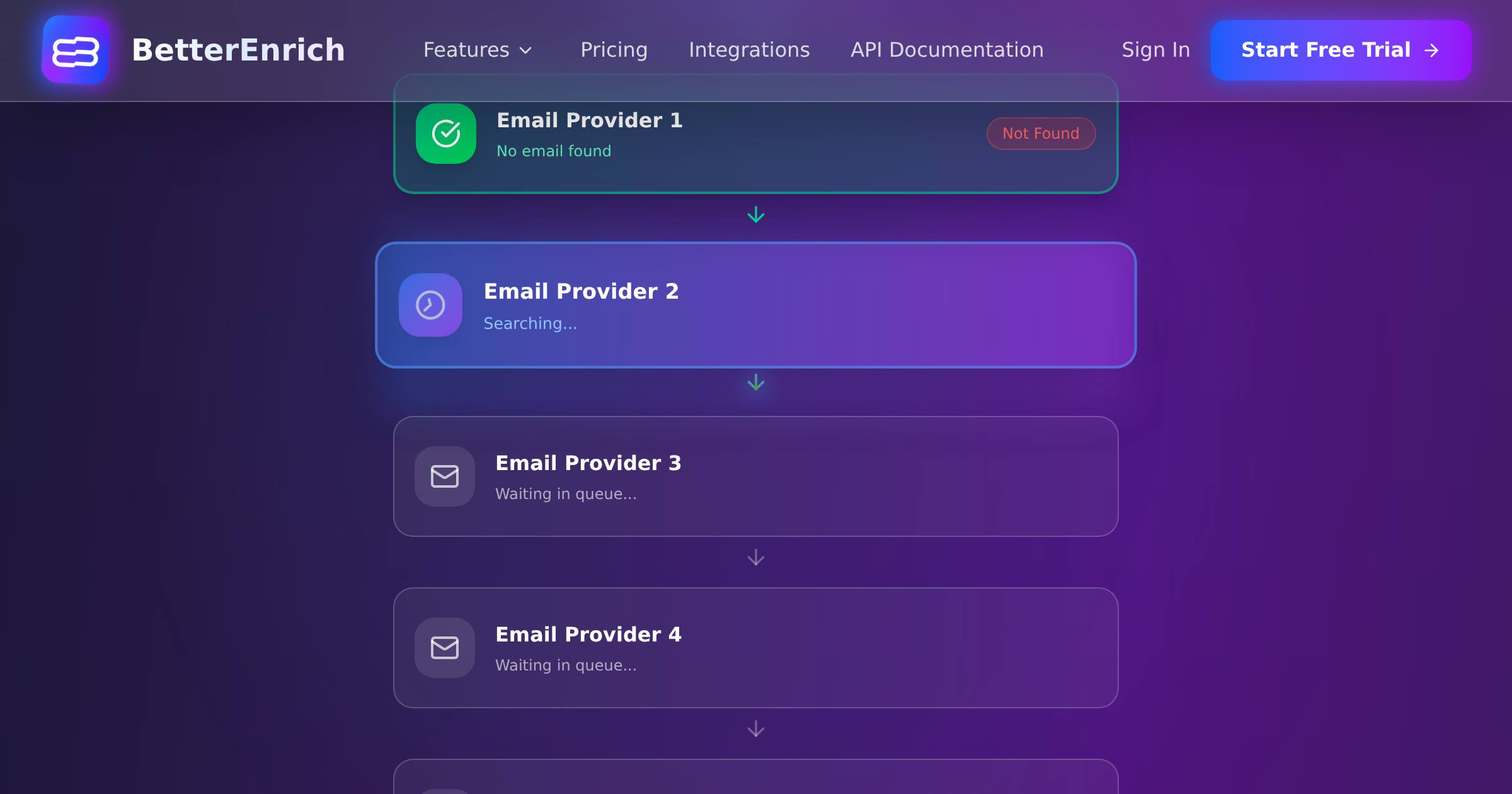
Waterfall enrichment cascades through 17+ providers to find mobile numbers that single sources miss. The coverage difference is real: 85-95% versus 50-70%. For phone data specifically, the improvement can be even more dramatic because mobile numbers are the hardest data point to source accurately.
Time Your Calls
Research consistently shows that certain times produce higher connect rates. Mid-morning (10-11am) and mid-afternoon (2-4pm) in the prospect's local time zone tend to perform best. Avoid Monday mornings (people are catching up from the weekend) and Friday afternoons (people have mentally checked out).
Location verification from your enrichment data helps here. If you know the prospect is based in Pacific time, you are not calling them at 6am their time because your dialer is set to Eastern.
Lead with Value, Not a Pitch
When you actually connect on a mobile, the first 15 seconds determine everything. The prospect did not expect your call. They picked up because they did not recognize the number and thought it might be important.
Do not waste those 15 seconds on a generic pitch. Use the enriched data you have to lead with something relevant: a trigger event at their company, a technology they are using that relates to your solution, a challenge specific to their industry.
Use Parallel Dialers Wisely
Modern dialers can call multiple numbers simultaneously and connect you to the first person who picks up. This multiplies your conversation volume significantly. But it only works if the underlying data is good.
Parallel dialing with unverified numbers is just automated noise. Parallel dialing with verified mobiles is a productivity multiplier. The tool is only as good as the data feeding it.
Combining Phone with Multi-Channel Sequences
Phone should not exist in isolation. The best-performing outreach sequences in 2026 use 4-7 touches across multiple channels:
- Day 1: Personalized email based on enriched data (company news, tech stack, trigger event)
- Day 2: LinkedIn connection request with a brief, relevant note
- Day 3: Call to verified mobile with voicemail if no answer
- Day 5: Follow-up email referencing the voicemail
- Day 7: LinkedIn engagement (comment on their post, share relevant content)
- Day 10: Second call attempt
- Day 14: Break-up email
The phone steps in this sequence are dramatically more effective when you are calling verified mobiles. You actually reach the person, and they have already seen your name in their email and LinkedIn notifications. The multi-channel presence builds familiarity before the call.
Measuring Phone Outreach Performance
Track these metrics to understand whether your phone strategy is working:
- Dial-to-connect rate: What percentage of calls result in a live conversation? (Target: 15-25% with verified mobiles)
- Connect-to-meeting rate: What percentage of conversations convert to scheduled meetings? (Target: 15-25%)
- Calls per meeting: How many total dials to book one meeting? (Target: under 50 with good data)
- Number validity rate: What percentage of dialed numbers are actually reachable? (Target: 85%+ with verified data)
- Landline rate: What percentage of your phone data turns out to be landlines? (Target: under 10%)
If your dial-to-connect rate is below 10%, your data is the problem, not your reps. Fix the data first.
The ROI Case for Verified Mobile Data
Let us run the math. A typical SDR makes 35 calls per day.
With unverified data (12% connect rate): 4.2 conversations per day, roughly 1 meeting per day (at 25% conversation-to-meeting rate).
With verified mobile data (25% connect rate): 8.75 conversations per day, roughly 2.2 meetings per day.
That is more than double the meetings from the same number of dials. If each meeting has a 20% chance of becoming a $30K deal, the verified data generates an additional $66K in pipeline per rep per month.
Compare that to the cost of mobile-verified enrichment data and the ROI is overwhelming. This is why the enrichment layer is not an expense. It is the single highest-leverage investment in your sales stack.
The Bottom Line
Cold calling in 2026 works if you call the right numbers. Verified mobile data is the difference between 4 conversations a day and 9. Between 1 meeting a day and 2. Between hitting quota and missing it.
The phone is not dead. Bad phone data is dead. And the teams that figure out the data side of cold calling are going to crush the ones still dialing switchboards and hoping for the best.