Account-based marketing works because it focuses resources on the accounts most likely to buy. 79% of marketers report higher ROI from ABM than any other marketing effort, according to Salesforce data. But ABM requires a specific kind of data foundation that most teams underestimate: complete, accurate contact data for every relevant person at every target account.
You cannot run account-based campaigns if you do not know who the decision-makers are, how to reach them, and what their company looks like right now. Enrichment is what fills those gaps.
Why ABM Demands Better Data Than Other Strategies
Traditional outbound works with a single-threaded approach: find one contact, send one sequence, hope for a response. ABM requires multi-threading across the entire buying committee. A typical B2B buying committee includes 6 to 10 decision-makers spanning multiple departments and seniority levels.
For each target account, you need:
- Contact details (verified email and phone) for 3 to 5 people minimum, ideally covering different roles in the buying process
- Firmographic data confirming the account still matches your ICP
- Technographic data revealing their current tool stack for personalized messaging
- Intent signals indicating whether they are actively evaluating solutions
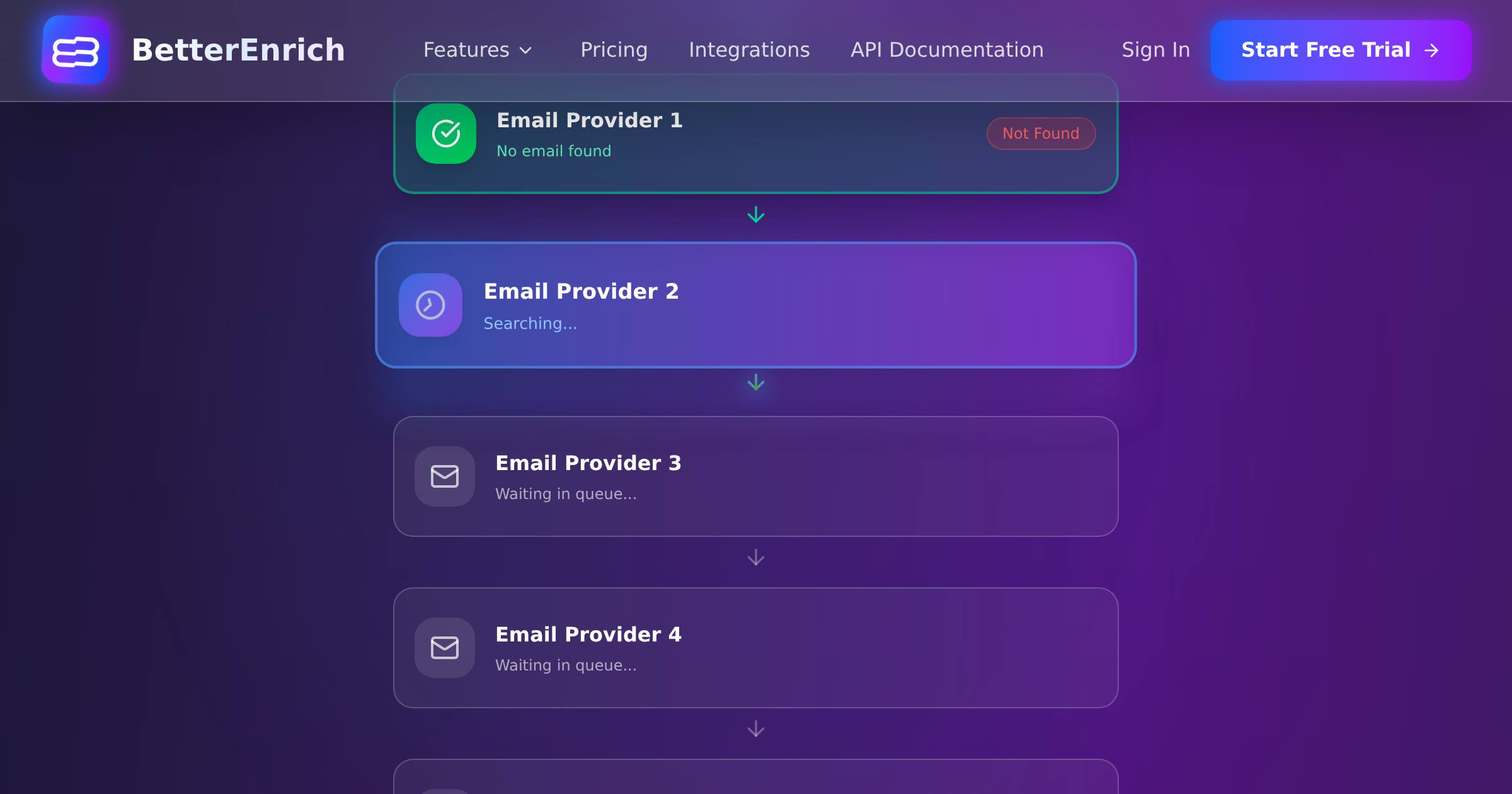
Single-source enrichment tools covering 50 to 70% of contacts mean you are missing 30 to 50% of the buying committee at every target account. In ABM, those gaps directly reduce your ability to influence the deal. Waterfall enrichment covering 85 to 95% gets you close to full coverage of the people who matter.
Building Your ABM Data Foundation
Step 1: Define and Score Target Accounts
Start with firmographic criteria from your ICP: industry, company size, geography, and technology stack. Layer in intent data if available. Bombora tracks 12,000 plus topics across 5,000 publisher websites and can identify which companies are researching topics related to your solution.
Score each account based on firmographic fit plus intent signals. A company that perfectly matches your ICP and shows active research interest in your category is a tier-one target. A company with good fit but no intent signals is tier two. A company with partial fit is tier three or below.
Step 2: Enrich Account-Level Data
Before hunting for individual contacts, enrich the account itself. You need current, accurate data on:
- Employee count to confirm company size has not changed since you added them to your list. Companies grow, shrink, get acquired, and merge. An account enriched 6 months ago may have changed dramatically.
- Technology stack to understand which tools they use. This informs both your messaging (competitive displacement angles) and qualification (are they using complementary tools that make your product more valuable?).
- Recent events like funding rounds, leadership changes, and acquisitions. These create timing windows for outreach.
- Revenue and growth trajectory to gauge budget availability and buying capacity.
Step 3: Map the Buying Committee
For each target account, identify the key roles involved in purchasing decisions for your category. A typical buying committee includes:
- Economic buyer: Controls the budget. Usually a VP or C-level executive.
- Champion: Advocates internally for your solution. Usually a director or senior manager who feels the pain most directly.
- Technical evaluator: Assesses whether your product works technically. Could be an IT leader, architect, or senior engineer.
- End users: The people who will actually use the product daily. Their input often determines whether a deal progresses or stalls.
- Legal and compliance: For regulated industries or larger companies, procurement and legal must approve vendor relationships.
Use enrichment to find contacts matching these roles at each target account. Search by department and seniority level, not just job title, because titles vary wildly across companies.
Step 4: Enrich Individual Contacts
For each identified role, enrich with:
- Verified work email: This is non-negotiable for ABM. You need to be able to reach these people directly, not through generic company addresses.
- Mobile phone number: Multi-threaded deals close 2 to 3 times more often than single-threaded deals. Phone outreach to multiple stakeholders dramatically improves your odds.
- Job title and seniority: Confirm the contact's current role. Job title changes affect 65.8% of contacts within 12 months, so freshness matters.
- LinkedIn profile URL: LinkedIn is a key ABM channel for connecting with individual stakeholders.
Coverage goal: verified email for 80% or more of identified buying committee members. Direct dial or mobile for 40% or more. With waterfall enrichment, these targets are realistic. With single-source tools, you will struggle to hit 60% email coverage.
ABM-Specific Enrichment Strategies
Personalization at the Account Level
Enrichment data enables account-specific messaging that generic outbound cannot match. Instead of sending the same email to everyone, you can:
- Reference the account's specific technology stack and how your product integrates or replaces existing tools
- Mention recent company news (funding, expansion, leadership change) that creates context for your outreach
- Tailor your value proposition to the specific challenges of their industry and company size
- Address each stakeholder's concerns based on their role (economic buyer gets ROI messaging, technical evaluator gets integration details, end user gets productivity benefits)
Conversion rates jump 30% when targeting psychological drivers specific to the buyer, according to Jolly Marketer research. Enrichment provides the raw data. Your messaging translates it into relevant, personalized outreach.
Multi-Channel Orchestration
ABM works best when you coordinate outreach across multiple channels for the same account. Enrichment data powers each channel differently:
- Email campaigns: Use verified work emails with account-specific personalization tokens (company name, tech stack, industry challenges).
- LinkedIn engagement: Connect with multiple stakeholders. Reference enriched data points (mutual connections, shared industry, compatible tech stack) in connection requests.
- Phone outreach: Call verified mobile numbers with specific, enriched context (mention their role, company news, relevant pain points).
- Display advertising: Upload enriched company lists to LinkedIn or other ad platforms for account-targeted display campaigns. Companies using enriched audiences for targeting see 15 to 30% lower CAC.
- Direct mail: For high-value tier-one accounts, enriched mailing addresses enable physical outreach that cuts through digital noise. Direct mail response rates of 2.7 to 4.4% dwarf email response rates.
Measuring ABM Enrichment Impact
ABM metrics look different from traditional lead gen metrics. Track these to measure how enrichment quality affects your ABM results:
- Account penetration rate: What percentage of identified buying committee members do you have contact data for? Target: 80% or higher.
- Multi-threading rate: How many contacts per account are you actively engaging? Target: 3 to 5 contacts per account.
- Account engagement score: Composite metric tracking interactions across all contacts and channels at each account.
- Pipeline per account: Revenue in pipeline attributed to each target account.
- Deal velocity: How fast deals progress from first touch to close in ABM accounts versus non-ABM accounts.
- Win rate: Percentage of ABM-targeted accounts that become customers versus overall win rate.
Keeping ABM Data Fresh
ABM is not a one-time campaign. Target accounts evolve, stakeholders change roles, companies get acquired, and intent signals fluctuate. Data decay at 22.5% per year means that a quarterly enrichment refresh is mandatory for any ABM program running longer than a single quarter.
Set up automated re-enrichment triggers:
- Re-enrich when an email bounces (the contact likely changed roles)
- Re-enrich when a job change signal is detected for any buying committee member
- Batch re-enrich all active target accounts quarterly, minimum
- Re-score accounts monthly based on fresh firmographic and intent data
The teams that treat ABM data as a living, continuously enriched asset are the ones that sustain the 79% ROI advantage over time. The ones that build a list once and campaign against it for a year watch their results degrade as the data underneath them rots. Enrichment is not just the starting point for ABM. It is the ongoing foundation that makes every ABM investment pay off.