Imagine knowing that a company is researching your product category six months before they ever fill out a demo form. That is what intent data does. It picks up digital signals that indicate a company is actively evaluating solutions in your space, and it surfaces those signals before your competitors even know the opportunity exists.
Intent data has been around for a few years now, but most sales teams still do not understand what it actually is, where it comes from, or how to use it without drowning in false positives. This guide covers all of it.
What Intent Data Actually Is
Intent data is behavioral information that suggests a company or individual is interested in a particular topic, product category, or solution. It goes beyond traditional demographics and firmographics to capture what companies are actively researching right now.
Think of it this way: firmographic data tells you a company is the right size and industry. Technographic data tells you they use compatible technology. Intent data tells you they are currently looking for what you sell. When you combine all three, you stop guessing and start prioritizing based on actual buying signals.
The Three Types of Intent Data
First-Party Intent
This is data from your own properties. Website visits, content downloads, pricing page views, demo requests, webinar registrations. You already have this if you are running any kind of analytics.
First-party intent is the most reliable signal because the prospect is directly engaging with your brand. Someone who visits your pricing page three times in a week is almost certainly evaluating your solution. The limitation is reach: you can only capture intent from people who already know you exist.
Second-Party Intent
This comes from partner platforms where prospects research solutions. The biggest sources include G2, TrustRadius, and Capterra (review sites where buyers compare products), LinkedIn (engagement with content related to your category), and industry-specific communities and forums.
Second-party intent is valuable because it catches buyers earlier in their research process. Someone comparing your category on G2 might not visit your website for another month. But you can reach out now while they are actively evaluating.
Third-Party Intent
This is the broadest category. Third-party intent aggregates research behavior across thousands of publisher websites. Bombora, the largest cooperative intent data provider, tracks 12,000+ intent topics across 5,000+ publisher websites.
Here is how it works: Bombora monitors content consumption across its network. When employees at Company X suddenly start reading a disproportionate amount of content about, say, CRM migration, Bombora flags that company as showing intent for CRM-related topics. The signal is based on a spike above baseline behavior, not absolute volume.
Third-party intent is the most powerful for identifying net-new accounts you were not even aware of. But it is also the noisiest. A single blog post read by one employee does not mean the company is in-market. You need sustained, multi-person activity to trust the signal.
How Intent Data Changes Your Sales Process
Prioritization
The most immediate value is prioritization. Instead of working your target account list alphabetically or by last-touch date, you work it by intent signal strength. Accounts showing strong intent get calls this week. Accounts with no intent signals go into nurture sequences.
Intent data identifies accounts 6-9 months before they contact vendors directly. That early warning is worth its weight in gold. Research suggests first-mover advantage delivers a 50% higher win rate. Being the first vendor a buyer talks to is a massive advantage.
Personalization
Intent data tells you what topics a prospect cares about. If they are researching data enrichment cost optimization, your outreach should lead with ROI messaging and cost comparisons. If they are researching GDPR compliance for enrichment, lead with your compliance features.
This is not just nice-to-have personalization like mentioning their company name. This is topical relevance. You are addressing the exact thing they are thinking about right now.
Timing
Most outreach fails because of timing, not message quality. Intent data solves the timing problem by showing you when an account moves from passive awareness to active evaluation. That transition is your window. Miss it, and you are competing against vendors they already engaged with.
Setting Up Intent Data: A Practical Guide
Step 1: Define Your Intent Topics
Work with your intent data provider to map your solution to specific topics. Be specific. If you sell data enrichment, your topics might include data enrichment, contact data quality, email verification, waterfall enrichment, CRM data management, and B2B data providers.
Cast a wide net initially, then narrow based on which topics actually correlate with pipeline.
Step 2: Set Thresholds
Not every intent signal is worth acting on. Set thresholds for what constitutes a meaningful signal. Most providers offer a surge score or composite score. Start with the provider recommended threshold and adjust based on your results.
A good rule of thumb: if acting on the signal would not change your outreach approach, the threshold is too low.
Step 3: Integrate with Your CRM
Intent data that lives in a separate dashboard is intent data that gets ignored. Push signals directly into your CRM so reps see them in context alongside firmographic data, contact info, and activity history.
The best setup: intent signals automatically update account scores in your CRM, trigger notifications to account owners, and add accounts to targeted outreach sequences.
Step 4: Combine with Enrichment
Intent data tells you which accounts are in-market. Enrichment data gives you the contacts to reach out to. You need both.
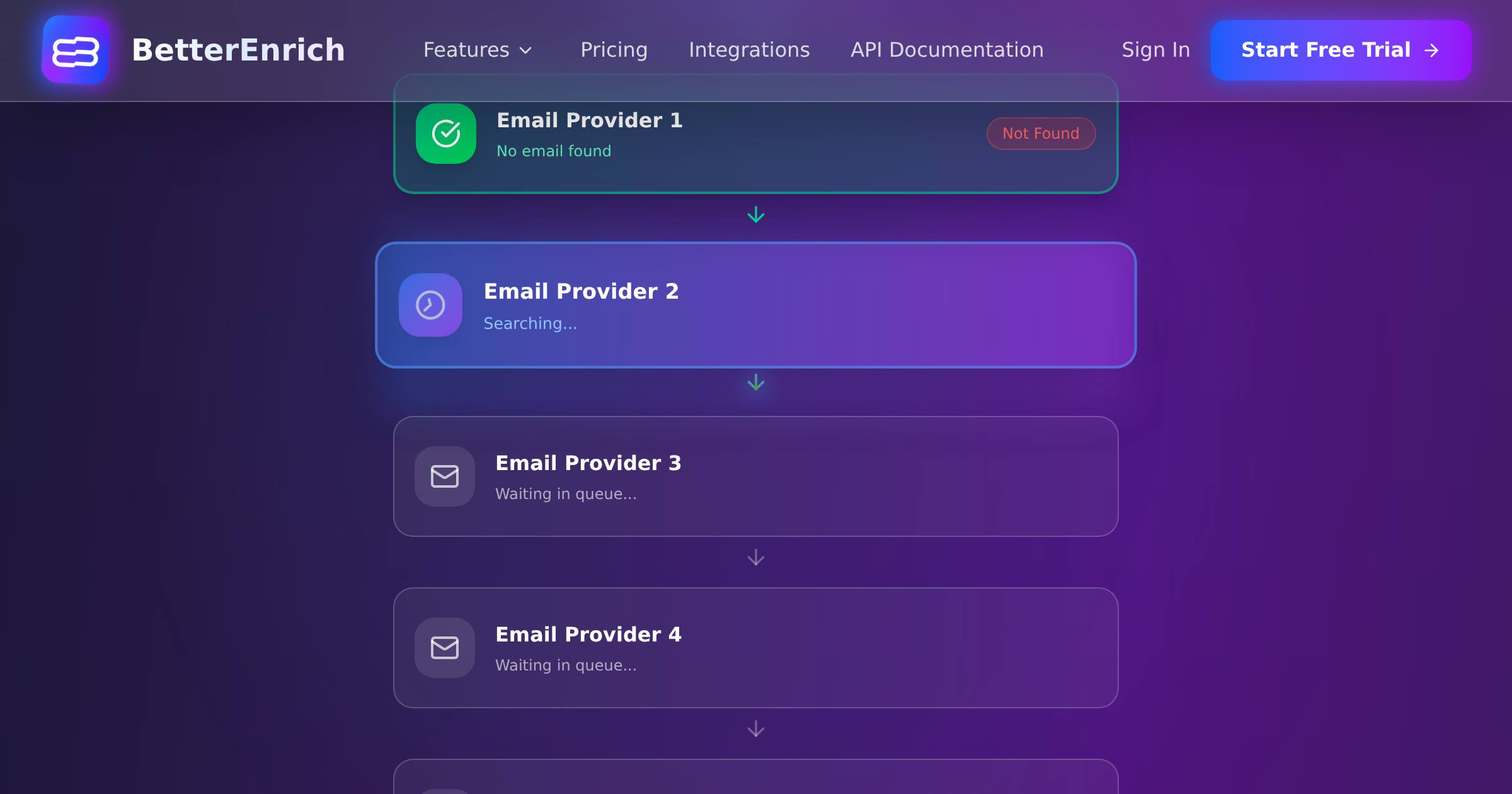
When an intent signal fires for Company X, your workflow should automatically enrich the key contacts at that company: the VP of Sales, the Director of Sales Ops, the CIO, whoever your buying committee typically includes. BetterEnrich can waterfall-enrich these contacts across 17+ sources so you have verified emails and mobile numbers ready for outreach within minutes of the intent signal firing.
Step 5: Measure and Refine
Track these metrics monthly:
- What percentage of intent-flagged accounts entered your pipeline? (Benchmark: 5-15%)
- Do intent-flagged accounts convert at a higher rate than non-intent accounts? (They should)
- What is the average time from intent signal to first meeting? (Target: under 2 weeks)
- Which intent topics have the highest signal-to-pipeline correlation?
Drop topics that generate noise without pipeline. Double down on topics that consistently predict deals.
Common Intent Data Pitfalls
Treating every signal as a hot lead. Intent signals mean interest, not intent to purchase. An employee reading a blog post is not the same as a buying committee running a formal evaluation. Layer intent with fit scoring to separate real opportunities from curiosity.
Ignoring signal decay. Intent signals have a shelf life. A spike from three months ago is stale. Act on signals within 1-2 weeks or move the account back to nurture.
Over-automating the response. Do not blast intent-flagged accounts with aggressive sales emails. Use the intent data to inform your approach, but keep the outreach human and relevant.
Not combining with contact enrichment. Knowing Company X is in-market is useless if you do not have the right contact data to reach the decision-makers. Always pair intent data with a strong enrichment layer.
The Major Players
Bombora dominates cooperative third-party intent with the largest network. 6sense combines intent data with AI-powered predictive analytics to forecast which accounts will buy. Demandbase integrates intent with account-based advertising and engagement. LinkedIn and G2 offer second-party intent from their platforms directly.
For enrichment to act on those signals, waterfall platforms like BetterEnrich give you the coverage to actually reach the contacts at intent-flagged accounts. The combination of Bombora or 6sense for signal detection plus BetterEnrich for contact enrichment is a powerful stack.
Is Intent Data Worth It?
For companies with a defined ICP and an outbound sales motion, absolutely. Intent data transforms outbound from a numbers game into a precision game. You stop calling 1,000 accounts hoping to find 10 that care and start calling 50 accounts that you know are actively researching your category.
The ROI case is straightforward. 79% of marketers report higher ROI from account-based strategies, and intent data is the fuel that makes ABM work. Without it, ABM is just expensive direct mail to accounts you hope are interested. With it, ABM is targeted engagement with accounts you know are evaluating.
If your average deal size is above $10K/year, the cost of intent data pays for itself with a single additional deal closed. For most B2B companies, that math works out within the first quarter.