If you are running an SDR team right now and your reps are still toggling between a dozen browser tabs to piece together prospect info, you are literally watching money evaporate. The average SDR makes 94.4 activities per day across calls, emails, voicemails, and social touches. That is a lot of context-switching, and every second spent on the wrong tool is a second not spent selling.
Here is the thing most sales leaders get wrong about tech stacks: they either go too lean (expecting reps to do everything manually) or too bloated (buying every shiny tool on the market). The sweet spot is a focused stack of 4-5 tools that cover each stage of the prospecting workflow without overlap.
Let us walk through exactly what a modern SDR stack looks like in 2026, why each piece matters, and how they fit together.
The Core Problem: SDRs Are Not Selling Enough
Before we talk tools, let us talk about the problem they solve. SDRs spend just 2 hours per day actively selling. That means 75% of their workday goes to research, data entry, administrative tasks, and navigating tools. Meanwhile, 83.4% of SDRs fail to consistently hit quota.
Those two stats are connected. When reps waste time on manual research and data wrangling, they have fewer quality conversations. Fewer conversations means fewer meetings booked, which means fewer deals closed.
The right tech stack does not just make reps faster. It fundamentally changes how much of their day is spent on revenue-generating activities. Teams using sales automation save roughly 12 hours per week per rep. That is nearly three full months of selling time reclaimed over a year.
Layer 1: The CRM (Your Single Source of Truth)
Everything starts with the CRM. Salesforce dominates the enterprise space with 150,000+ customers, but HubSpot has become the go-to for mid-market and growing companies. Pipedrive and Zoho serve smaller teams well.
The CRM is not optional. It is the foundation everything else plugs into. If your enrichment data, call logs, email threads, and meeting notes do not flow back into the CRM, you are building on sand.
What to look for in 2026: native enrichment integrations, real-time sync with your other tools, and solid reporting. Your CRM should tell you which activities drive pipeline, not just store contact records.
Pro tip: pick the CRM first, then build the stack around it. Switching CRMs later is painful and expensive. Most integration ecosystems are built around Salesforce and HubSpot, so you will have the most options with either of those.
Layer 2: Data Enrichment (The Intelligence Engine)
This is where most stacks either shine or fall apart. Your reps need accurate contact data: verified work emails, direct mobile numbers, and enough context about the prospect and their company to personalize outreach.
The old approach was subscribing to a single data provider like ZoomInfo and hoping their database had what you needed. The problem? Single-source tools typically deliver 50-70% coverage. That means for every 100 prospects, you are missing data on 30-50 of them.
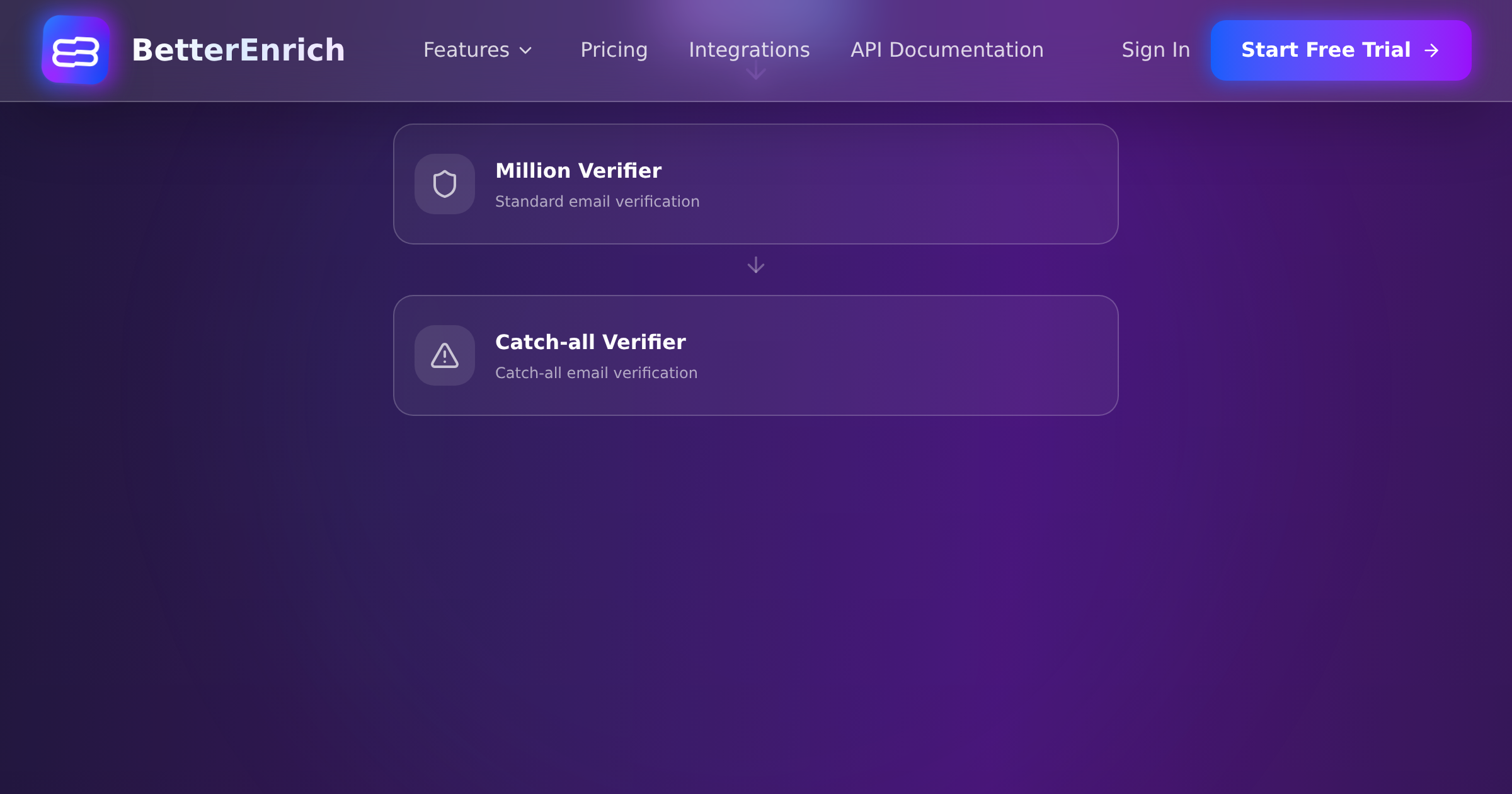
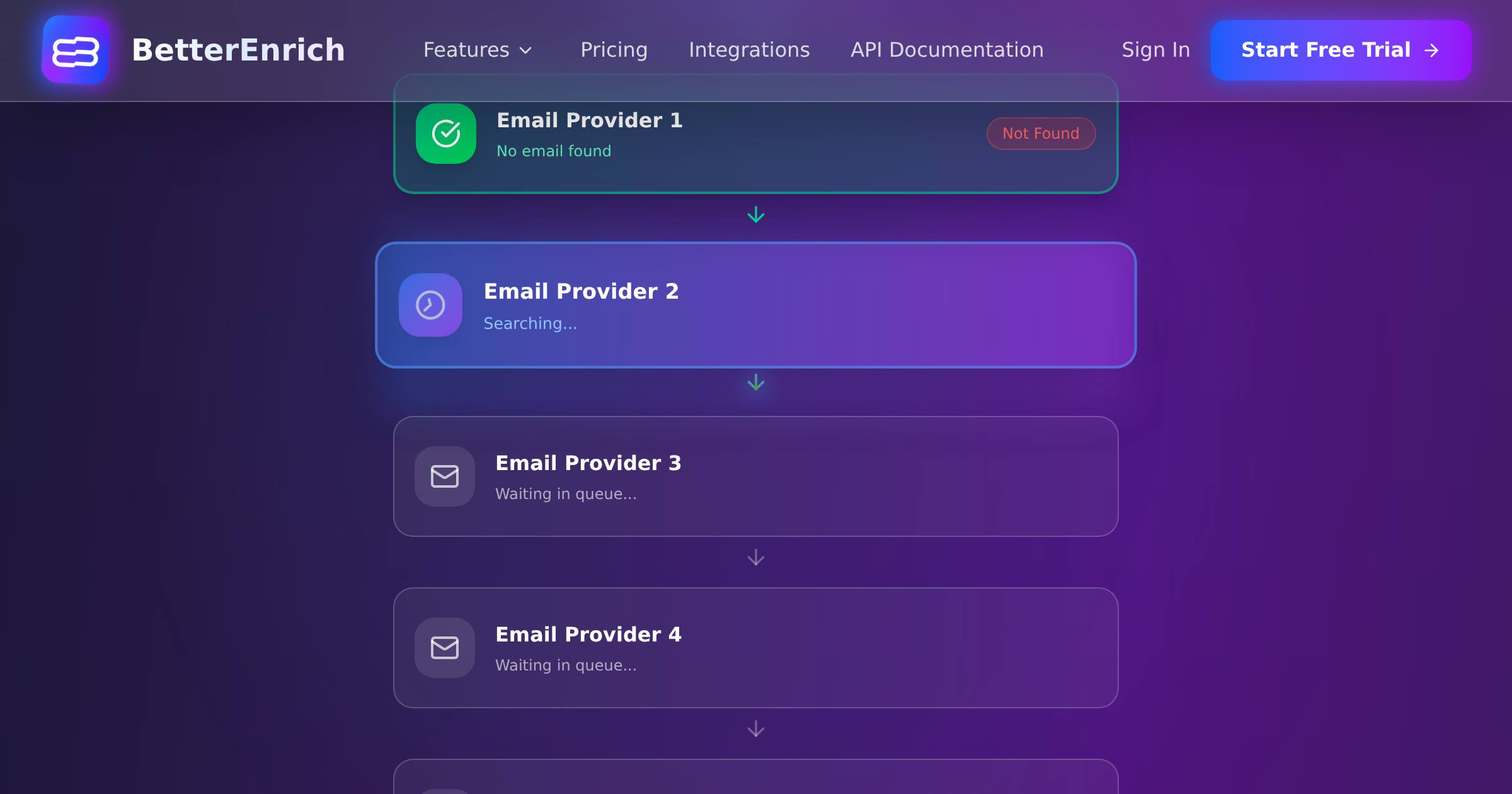
The modern approach is waterfall enrichment. Instead of relying on one provider, waterfall platforms cascade your query through multiple data sources. If Provider A does not have the email, it tries Provider B, then C, all the way through 15-17+ sources. This pushes coverage rates up to 85-95%.
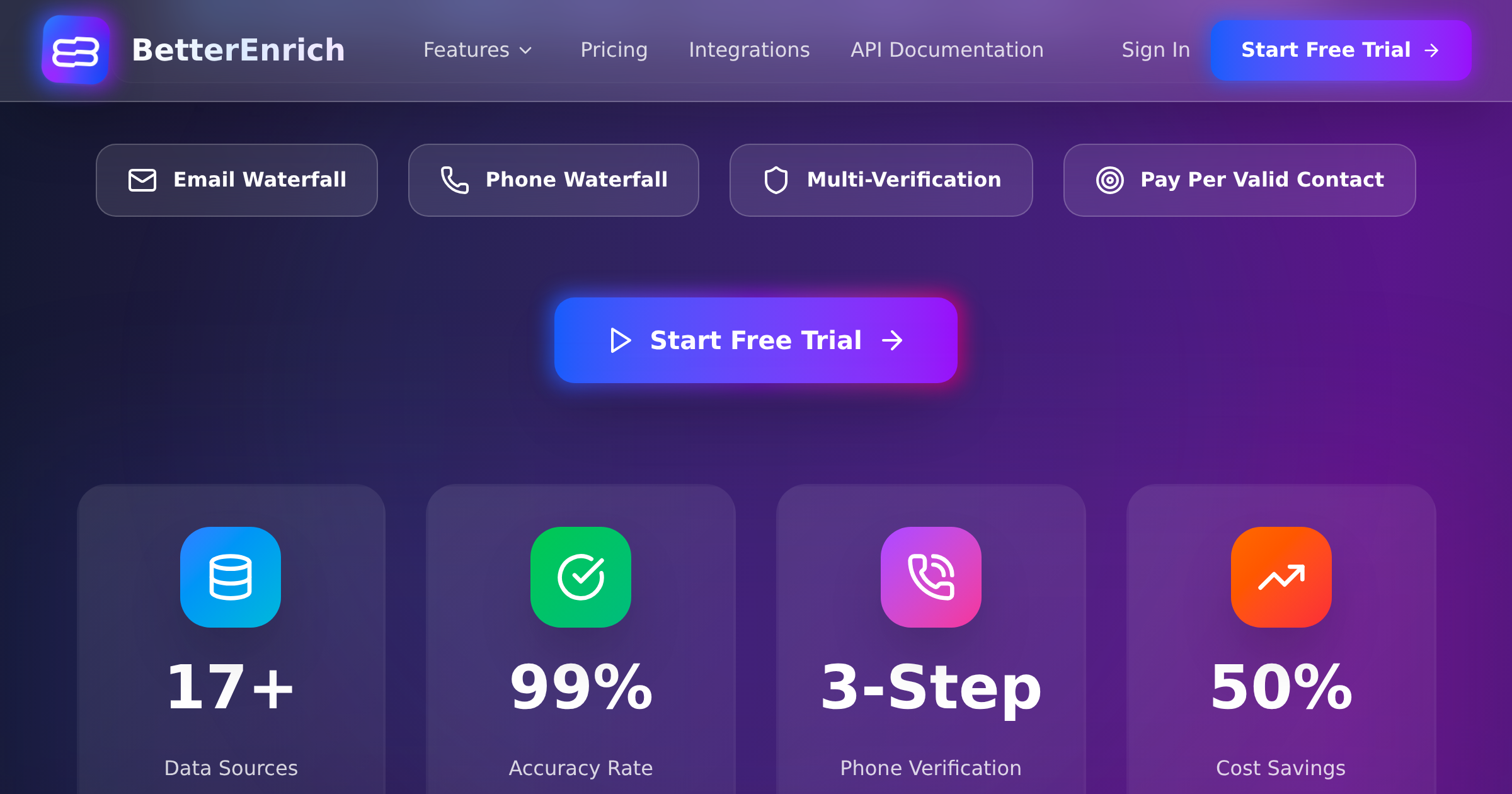
BetterEnrich runs this waterfall across 17+ premium data sources and only charges for valid results. That pay-per-valid model matters because you are not burning budget on bad data. Compare that to subscription models where you pay regardless of whether the data is accurate or even exists.
Key features to prioritize in your enrichment layer:
- Waterfall/multi-source architecture for maximum coverage
- Email verification built into the enrichment process
- Mobile number discovery with line-type detection (so you do not get landlines)
- CRM integration that writes enriched data back automatically
- Pay-per-valid pricing to control costs
Layer 3: Sales Engagement (The Outreach Engine)
Once you have the data, you need a platform to actually execute outreach sequences. This is where tools like Outreach, Salesloft, Apollo (which doubles as enrichment), and Instantly come in.
A sales engagement platform manages your multi-touch sequences: the emails, calls, LinkedIn touches, and follow-ups that turn a cold prospect into a booked meeting. The best ones handle email warm-up, A/B testing, send-time optimization, and activity logging back to the CRM.
What matters in 2026: deliverability management is now non-negotiable. With Google and Yahoo enforcing DMARC and tightening spam filters, your engagement tool needs to help you stay out of the spam folder, not just send emails fast.
Also look for AI-powered features like reply sentiment detection, automatic follow-up scheduling, and sequence branching based on prospect behavior. These used to be nice-to-haves. Now they are table stakes.
Layer 4: Phone and Dialer (The Conversation Engine)
Cold calling is not dead. But it has changed. SDRs average just 4.4 quality conversations per day, down 45% since 2014. The reps who succeed in 2026 are the ones calling verified mobile numbers instead of switchboard lines.
Mobile connect rates run 3-5x higher than switchboard calls. That is the difference between reaching the actual decision-maker and getting stuck with a gatekeeper who is never going to transfer you.
Modern dialers like Orum, Nooks, and PhoneBurner offer parallel dialing (calling multiple numbers simultaneously), voicemail drop, call recording, and real-time coaching. These tools multiply call volume without multiplying headcount.
The enrichment layer feeds directly into this. When your data enrichment platform verifies that a number is actually a mobile line (not a landline or VoIP number), your dialer is working with higher-quality data. BetterEnrich runs 3-step phone verification covering format validation, line-type detection, and location verification, so your reps are not wasting dials on numbers that will never connect.
Layer 5: LinkedIn and Social Selling
LinkedIn Sales Navigator is basically a requirement for B2B SDRs now. With 900+ million members, LinkedIn is where your prospects live professionally. Sales Navigator gives you advanced search, lead recommendations, InMail credits, and CRM sync.
Chrome extensions from tools like Lusha, Kaspr, and Seamless.AI let reps enrich contacts directly from LinkedIn profiles. One click, and you have the work email and phone number without leaving the browser.
The play here is combining LinkedIn engagement with your outreach sequences. A connection request, followed by an email, followed by a call creates the multi-channel presence that actually gets responses in 2026.
How These Layers Connect
The real value is not in any individual tool. It is in how they talk to each other. Here is what a modern workflow looks like:
- You identify target accounts using ICP criteria in your CRM or Sales Navigator
- Your enrichment layer waterfall-enriches each contact with verified emails and mobile numbers
- Enriched contacts sync to your CRM and engagement platform automatically
- Your engagement platform runs the multi-touch sequence: email, call, LinkedIn, follow-up
- Your dialer connects reps with verified mobiles for the call steps
- All activity logs back to the CRM for reporting and pipeline tracking
The whole thing runs with minimal manual intervention. The SDR focuses on having conversations and booking meetings, not on finding data or updating records.
What About AI Tools?
AI is everywhere in sales tech right now, and honestly, a lot of it is hype. But some applications are genuinely useful.
AI-powered email writing assistants can draft personalized first lines based on enriched data points. AI call coaching tools analyze conversations in real-time and suggest talking points. AI lead scoring models use enrichment data to predict which prospects are most likely to convert.
The key is treating AI as an accelerator, not a replacement. AI adoption in sales yields a 10-15% immediate increase in productivity. That is meaningful, but it is not a magic bullet. The reps still need to show up prepared, ask good questions, and handle objections.
Common Stack Mistakes to Avoid
First, do not buy tools that overlap. If your enrichment platform includes email verification, you do not need a separate verification tool. If your engagement platform has a built-in dialer, you might not need a standalone one.
Second, do not ignore integration. A tool that cannot connect to your CRM is a data silo waiting to happen. Every piece of your stack should sync bidirectionally with your CRM.
Third, do not cheap out on data. The enrichment layer is where most of the ROI lives. Enriched data drives 66% higher conversion rates and 38% shorter sales cycles. Skimping on data quality to save a few hundred dollars a month is a false economy when each enriched lead costs 3-10x less than a paid-channel lead.
Fourth, do not over-tool. More is not better. The median SDR tech stack is a CRM plus 4-5 productivity tools. If your reps need training on 10+ platforms, you have gone too far.
Budget Guidance
For a team of 5 SDRs, expect to spend roughly:
- CRM: $50-150/user/month ($250-750/month total)
- Enrichment: $200-500/month for waterfall enrichment with pay-per-valid pricing
- Engagement platform: $75-150/user/month ($375-750/month total)
- Dialer: $50-100/user/month ($250-500/month total)
- LinkedIn Sales Navigator: $80-130/user/month ($400-650/month total)
Total: roughly $1,500-3,150/month for a fully equipped 5-person SDR team. Compare that against the cost of one additional SDR hire (salary, benefits, management overhead) and the math works out clearly in favor of better tools over more headcount.
The Bottom Line
Your SDR tech stack in 2026 needs five layers: CRM, enrichment, engagement, phone, and social. Each layer serves a specific purpose, and they work best when they are tightly integrated.
The enrichment layer is the foundation everything else depends on. Without accurate, verified contact data, your engagement sequences hit dead ends, your dialers call wrong numbers, and your CRM fills up with garbage. Start there, get the data right, and the rest of the stack becomes dramatically more effective.
If your team is still piecing together prospect data from multiple browser tabs and hoping for the best, it is time for an upgrade. The tools exist. The integrations exist. The only question is whether you are going to keep losing selling time to manual busywork or invest in a stack that lets your reps actually sell.