Apollo and BetterEnrich represent two fundamentally different approaches to finding contact data. Apollo gives you access to a massive single database of 275 million or more contacts. BetterEnrich cascades your query through 17 or more premium data sources using waterfall logic. The question is not which tool is better in the abstract. It is which model works better for your specific situation, your ICP, your budget, and your workflow requirements.
How the Two Models Work
Apollo operates as a database-access model. They maintain a large, centralized database of business contacts. When you search for contacts, you are querying their database directly. Results come back instantly because the data is already indexed and stored. The advantage is speed and simplicity. The limitation is that if Apollo's database does not have a particular contact, you get nothing.
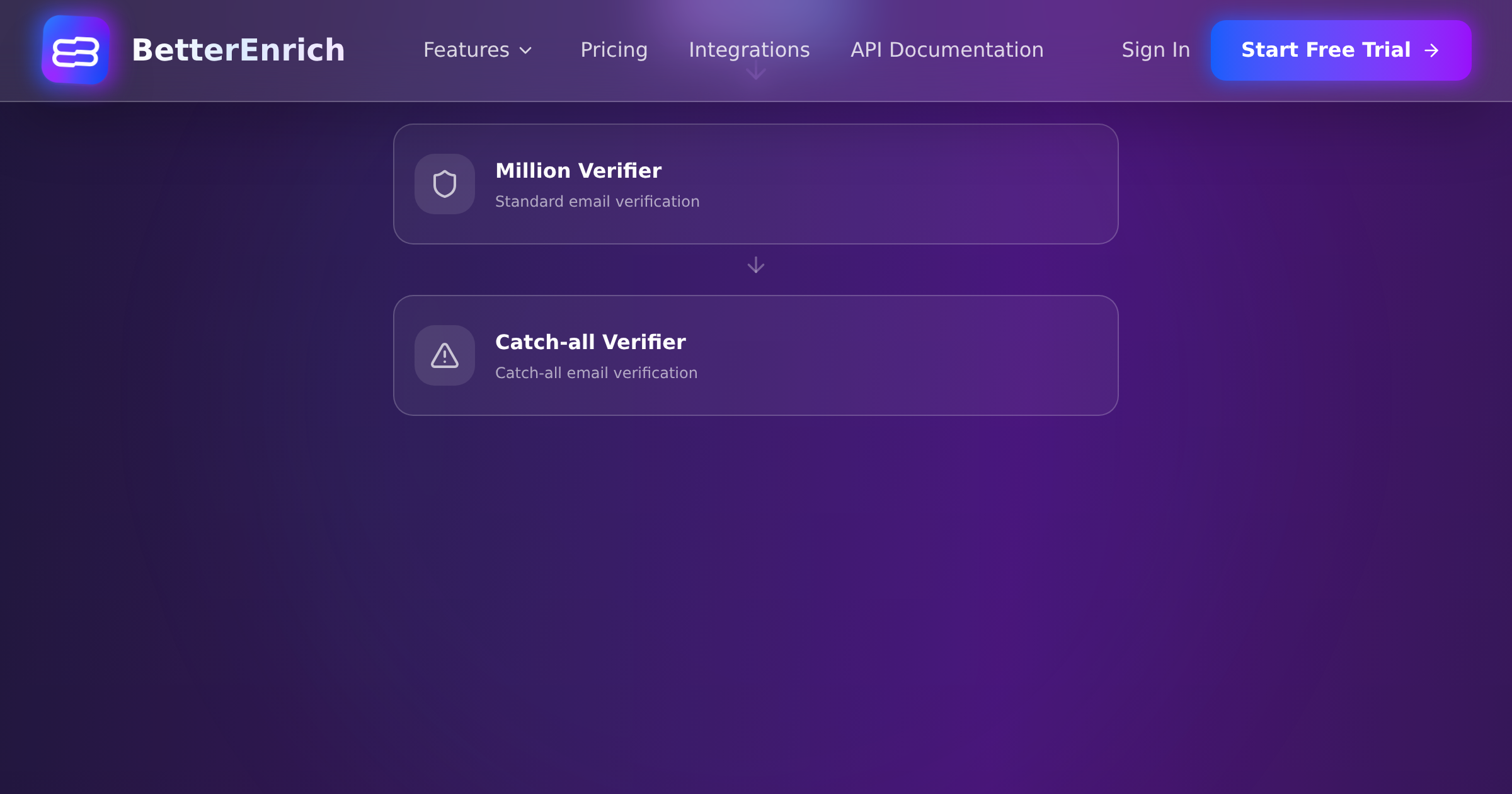
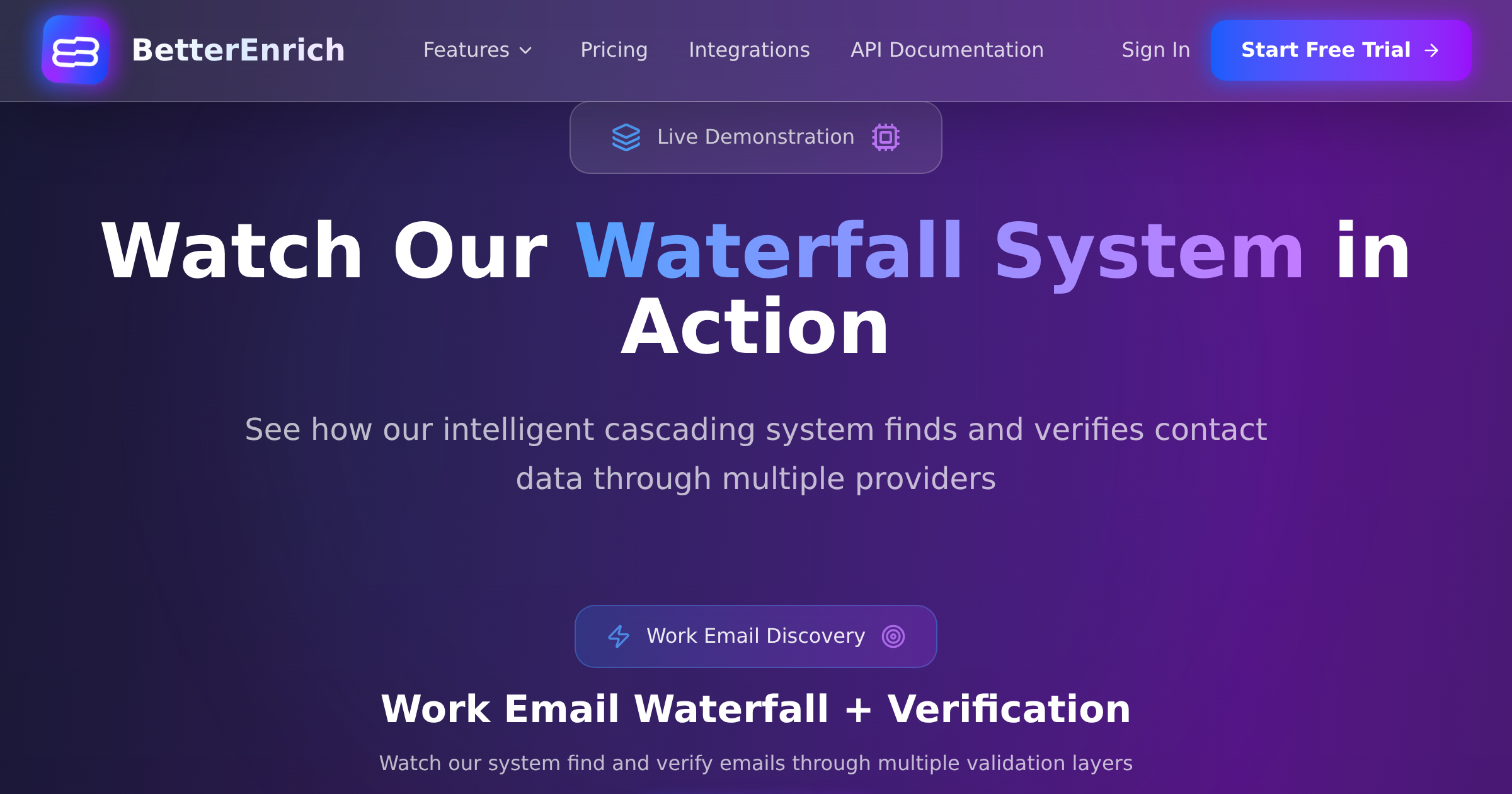
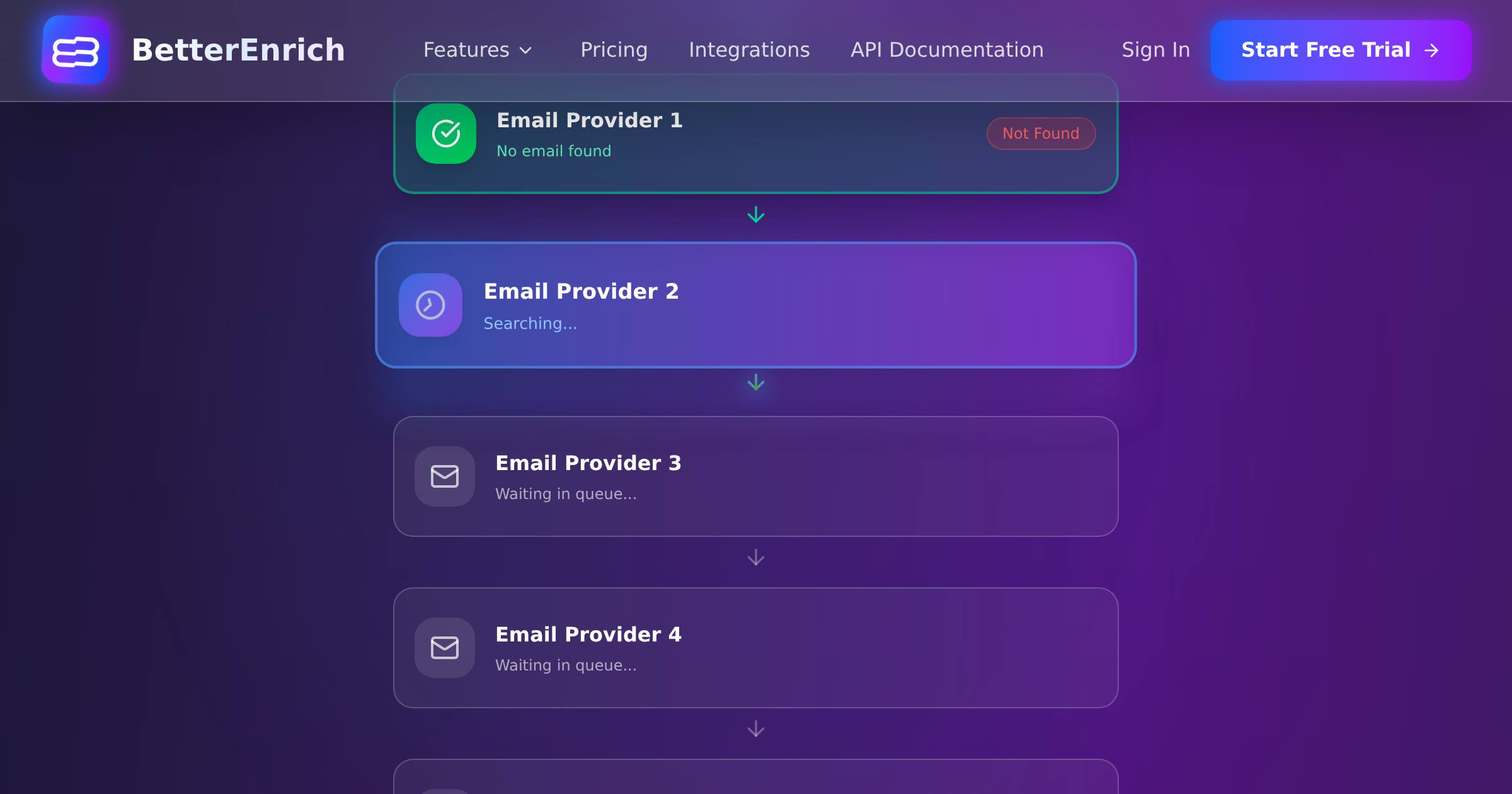
BetterEnrich operates as a waterfall enrichment model. When you submit a lookup, it queries multiple data sources sequentially. If the first source does not have the contact, it tries the second, then the third, cascading through 17 or more providers until it finds verified data. This takes slightly longer, typically 30 to 90 seconds for asynchronous processing, but it checks far more data sources for each lookup.
Think of it this way: Apollo is like searching one very large library. BetterEnrich is like having a research librarian check 17 libraries for you and bring back whatever they find.
Coverage Comparison
Coverage is where the models diverge most significantly. Single-source tools like Apollo typically achieve 50 to 70 percent coverage rates. This means that for every 100 contacts you search for, 30 to 50 will come back empty. That is a lot of dead ends, especially if you are building targeted prospect lists where every contact matters.
Waterfall enrichment tools like BetterEnrich typically achieve 85 to 95 percent coverage rates. The cascading approach means that contacts missed by one provider are often found by another. The incremental coverage from each additional data source in the waterfall adds up to significantly better results overall.
The coverage gap is most pronounced for certain types of contacts: people at smaller companies, those in non-tech industries, contacts in regions outside North America, and individuals who have recently changed jobs. These are exactly the contacts that a single database is most likely to miss but that a multi-source waterfall will often find.
Data Accuracy
Apollo has faced accuracy concerns from users, particularly around phone numbers and email verification. Community feedback suggests that while the database is broad, not all records are current or verified. This can lead to higher bounce rates in email campaigns and wrong numbers when cold calling.
BetterEnrich claims a 99 percent accuracy rate across verified contacts, which is supported by their three-step phone verification process (format validation, line-type detection, and location verification) and multi-source email verification. The waterfall approach has a built-in accuracy advantage: when multiple sources agree on a data point, confidence in that data is higher than when relying on a single source.
The practical test is bounce rate. If you are seeing bounce rates above 5 percent from your enrichment tool, the accuracy is not sufficient for reliable outreach. Run a test batch of 500 contacts through both tools and compare deliverability results to see which performs better for your specific ICP.
Pricing Model Differences
Apollo uses a per-seat subscription model starting at $49 to $119 per month per user. This means your cost scales with headcount rather than usage. A team of 10 reps at the mid-tier plan costs $1,190 per month regardless of how many lookups they perform. There is a free tier that allows limited access, which is useful for evaluation.
BetterEnrich uses a pay-per-valid model. You only pay for lookups that return verified, usable data. If the waterfall queries all 17 sources and still cannot find the contact, you are not charged. If a phone lookup returns a landline instead of a mobile number, you are not charged. This model eliminates waste and makes costs directly proportional to results.
The cost comparison depends on volume. For a team of 5 reps doing light prospecting, Apollo's per-seat model may be cheaper. For a team enriching thousands of records per month, BetterEnrich's pay-per-valid model typically delivers 50 percent cost savings because you never pay for unsuccessful lookups or invalid data.
Feature Set Comparison
Apollo is a broader platform. Beyond enrichment, it includes email sequencing, a dialer, LinkedIn integration, analytics, and workflow automation. If you want an all-in-one tool for prospecting and outreach, Apollo consolidates multiple functions into a single interface.
BetterEnrich is focused on data. It does enrichment exceptionally well and provides API access for integration with your existing tools. It does not try to replace your email sequencer, dialer, or CRM. This focused approach means you pair BetterEnrich with best-of-breed tools for each function rather than using a single platform for everything.
The question is whether you prefer an integrated suite or a best-of-breed stack. Integrated suites are simpler to manage but may compromise on individual capabilities. Best-of-breed stacks require more integration work but let you choose the strongest tool for each function.
API and Integration
Both tools offer API access, but the integration patterns differ. Apollo's API is well-documented and supports searching, enriching, and accessing their database programmatically. BetterEnrich's API (documented at betterenrich.readme.io) is designed specifically for enrichment workflows, supporting both synchronous single lookups and asynchronous bulk processing with webhook callbacks.
For CRM integration, Apollo offers native integrations with Salesforce and HubSpot through their app marketplace. BetterEnrich integrates via API, Zapier, Make, and n8n, giving it flexibility across any CRM with an API endpoint. Both approaches work, but Apollo is easier to set up while BetterEnrich offers more customization in how enrichment fits into your workflow.
When to Choose Apollo
Apollo is the better choice if you want a single platform for prospecting and outreach and your budget supports per-seat pricing. It works well for teams that need instant results (no waiting for waterfall processing), want built-in email sequencing and calling, primarily prospect in North American tech markets where Apollo's database is strongest, and prefer simplicity over maximum coverage.
When to Choose BetterEnrich
BetterEnrich is the better choice if data accuracy and coverage are your top priorities. It works well for teams that need to enrich in bulk (thousands of records), want to pay only for results that actually work, sell into diverse industries or international markets, need the highest possible coverage rates, already have a sales engagement platform and just need better data, and want verified phone numbers for cold calling programs.
Running a Head-to-Head Test
The only way to know which tool works better for your specific situation is to test both against the same dataset. Here is how:
- Pull 500 contacts from your CRM that need enrichment
- Strip the fields you want to enrich (email, phone, title)
- Send the same 500 records through both Apollo and BetterEnrich
- Compare find rate, email verification results, phone verification results, and total cost
- Spot-check 50 records against LinkedIn for accuracy
This test takes about a week and gives you concrete data specific to your ICP rather than relying on vendor claims. The results often surprise teams that assumed one tool would dominate. Coverage and accuracy vary significantly by industry, geography, and contact seniority, so your mileage will genuinely vary.