ZoomInfo is the 800-pound gorilla of B2B data. With 420 million or more contacts and a comprehensive feature set covering intent data, engagement tools, and GTM intelligence, it earned its spot as the industry standard for enterprise sales teams. But the price tag, starting at $15,000 to $25,000 per year and climbing fast with add-ons, puts it out of reach for most growing companies. And even for teams that can afford it, many find they are paying for features they never use.
If you are evaluating alternatives, you need to understand what you are actually shopping for. Some tools compete with ZoomInfo across the board. Others focus on doing one thing exceptionally well at a fraction of the cost. The right choice depends on what you actually need versus what ZoomInfo bundles into its platform.
What You Are Really Paying For with ZoomInfo
ZoomInfo is not just a contact database. It is a platform that bundles data, intent signals, engagement tools, workflow automation, and analytics. When you leave ZoomInfo, you need to decide which of these capabilities actually drive results for your team and which are nice-to-have features gathering dust.
Most teams use ZoomInfo for three core functions: finding contact data (emails and phone numbers), filtering by firmographic and technographic criteria, and enriching CRM records. If those are your primary use cases, you can replicate them at significantly lower cost with specialized tools.
The Alternatives Worth Considering
1. BetterEnrich (Waterfall Enrichment)
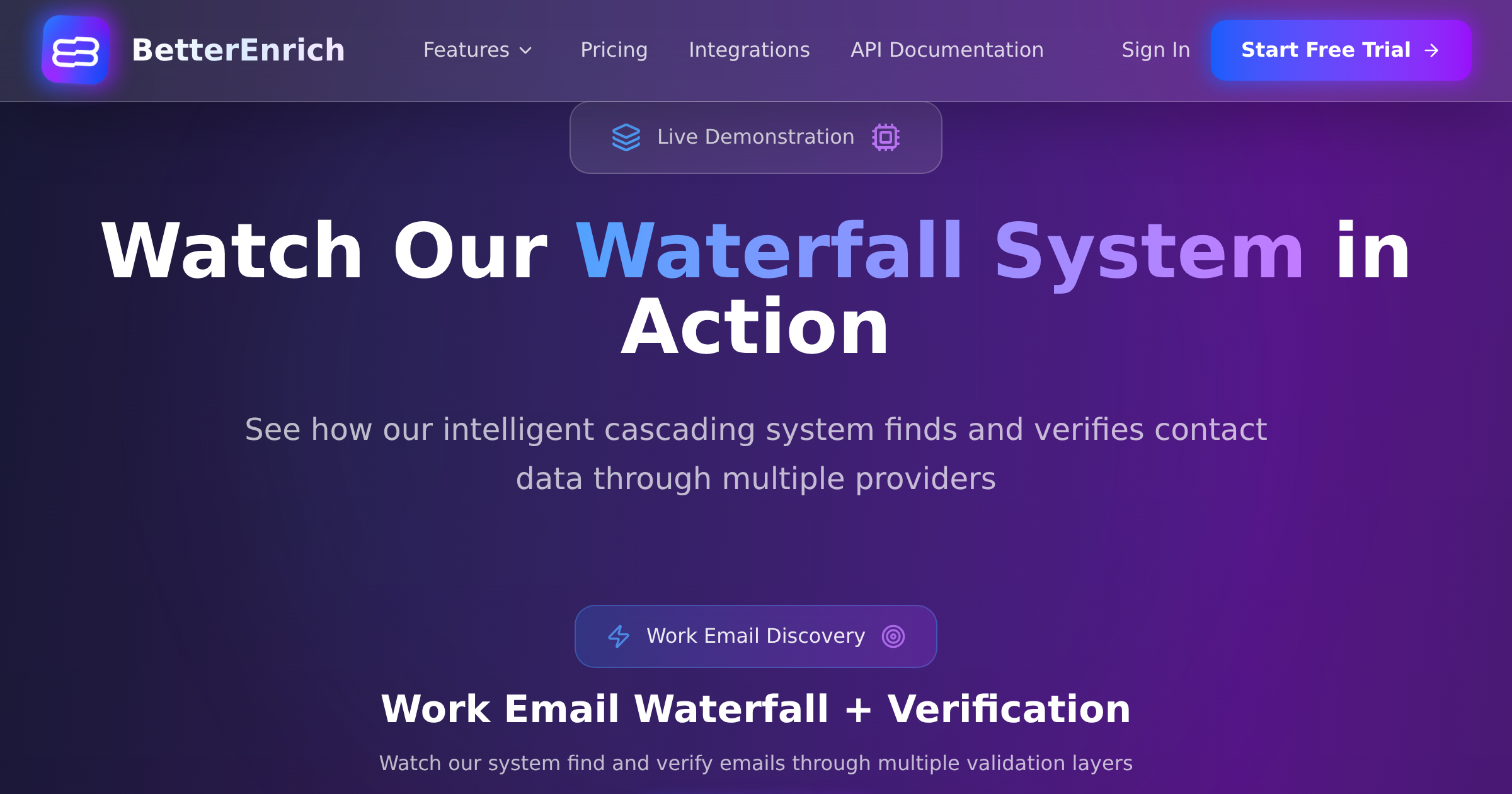
BetterEnrich takes a fundamentally different approach by cascading your lookup through 17 or more premium data sources using waterfall logic. Instead of relying on a single database that may or may not have the contact you need, it checks multiple providers sequentially until it finds verified data. The pay-per-valid pricing model means you only pay for contacts that are actually verified and usable. Typical cost savings run around 50 percent compared to ZoomInfo, with coverage rates of 85 to 95 percent, often higher than single-database tools. Best for teams that prioritize data accuracy and cost efficiency over platform features.
2. Apollo.io
Apollo offers 275 million or more contacts with a full prospecting and engagement platform starting at $49 per month per user. The free tier is generous enough for individual contributors to test before committing. The database is broad but accuracy concerns have been reported by users, particularly for phone numbers and less common industries. Apollo recently acquired Pocus, adding product-led growth signals to its platform. Best for teams that want an all-in-one prospecting and outreach tool at mid-market pricing.
3. Cognism
Cognism stands out for European data coverage, offering roughly three times more EU contacts than US-centric tools. Their Diamond Data feature provides phone-verified mobile numbers, which is a significant differentiator for cold calling teams. GDPR compliance is built into their DNA rather than bolted on. Pricing is custom but typically falls between Apollo and ZoomInfo. Best for teams selling into European markets or prioritizing GDPR-compliant data sourcing.
4. Lusha
Lusha focuses on simplicity with a Chrome extension that lets you pull contact data directly from LinkedIn profiles. The credit-based pricing model with rollover credits gives flexibility for teams with variable enrichment needs. The tool does one thing well: fast, individual contact lookups. It is not built for bulk enrichment or complex workflows. Best for individual sales reps who prospect primarily through LinkedIn.
5. Clay
Clay is a data orchestration platform that connects to over 100 data sources and lets you build custom waterfall workflows. There are no per-seat charges, and workspace-level credit tuning gives teams granular cost control. The trade-off is complexity: you need to build and maintain your own enrichment logic rather than using a turnkey solution. Best for technically savvy teams that want maximum flexibility and are willing to invest setup time.
6. Clearbit (Now Part of HubSpot)
HubSpot acquired Clearbit and integrated its enrichment capabilities natively into the HubSpot platform. For HubSpot users, this makes Clearbit the path of least resistance for enrichment. For non-HubSpot users, access to Clearbit's standalone tools has become more limited and the pricing for annual licenses has drawn criticism. Best for HubSpot-native teams that want built-in enrichment without third-party integrations.
7. Seamless.AI
Seamless.AI uses artificial intelligence to search and verify B2B contact data in real time rather than relying on a static database. The real-time approach means data is theoretically fresher than database-based tools, though results can be inconsistent. The interface is built for individual prospecting rather than bulk operations. Best for reps who want real-time contact discovery and are comfortable with some result variability.
8. FullEnrich
FullEnrich is a direct competitor to BetterEnrich in the waterfall enrichment space, cascading queries through 15 or more data vendors including Apollo, DropContact, and Hunter. The waterfall approach delivers higher coverage than single-source tools. Pricing and feature sets are broadly similar to other waterfall providers. Best for teams already committed to the waterfall enrichment model who want to compare options.
9. Kaspr
Kaspr focuses on LinkedIn-based contact data extraction with a simple Chrome extension and a generous free tier. The tool pulls email addresses and phone numbers directly from LinkedIn profiles. Coverage is strongest for European contacts. Best for European teams doing LinkedIn-first prospecting on a limited budget.
10. Snov.io
Snov.io combines email finding with email outreach in a single platform. The email finder uses domain search, name-based lookup, and LinkedIn extension approaches. The built-in email sequencing and warm-up tools make it a genuine all-in-one for small teams. Pricing starts low and scales with usage. Best for small teams that want email finding and outreach in a single affordable tool.
How to Choose the Right Alternative
Start with your actual use cases, not a feature comparison matrix. Answer these questions:
- How many contacts do you need to enrich per month? If under 1,000, most tools work. Above 10,000, you need bulk processing capabilities and cost-efficient pricing.
- Do you need phone numbers or just emails? Phone data is scarcer and more expensive. If cold calling is core to your process, prioritize tools with phone verification like BetterEnrich or Cognism.
- What CRM do you use? If you are on HubSpot, Clearbit integration is seamless. For Salesforce, most tools integrate well. For other CRMs, check API and webhook support.
- How technical is your team? Clay requires workflow building. BetterEnrich and Apollo are more turnkey. Lusha requires almost no setup.
- What is your geographic focus? European-heavy ICPs should consider Cognism. Global coverage is better served by waterfall approaches.
- What is your budget? Under $500 per month: Lusha, Kaspr, Snov.io, or BetterEnrich pay-per-valid. $500 to $5,000 per month: Apollo, Cognism, Clay, or BetterEnrich at higher volume. Above $5,000 per month: you might actually need ZoomInfo, or you could get equivalent coverage from a waterfall tool at lower cost.
The Waterfall Advantage
One trend worth highlighting: the market is shifting from single-database tools toward waterfall and multi-source enrichment. The reason is simple math. No single database has every contact. Coverage rates for single-source tools typically range from 50 to 70 percent. Waterfall approaches that check multiple sources push coverage to 85 to 95 percent.
For the same budget, a waterfall tool often delivers more verified contacts than a premium single-source subscription. This is particularly true with pay-per-valid pricing, where you only pay for contacts that actually return verified data. The wasted spend on unsuccessful lookups disappears.
ZoomInfo built its dominance in an era when having the biggest single database was the winning strategy. The market has evolved. Multiple specialized databases, intelligently cascaded, now consistently outperform any single source on both coverage and cost efficiency.
Running a Bake-Off
Before committing to any alternative, run a proper evaluation. Take a sample of 500 to 1,000 contacts from your CRM. Strip the enrichable fields (email, phone, title) and send the records to your top two or three candidate tools. Compare results on: find rate (what percentage returned data), accuracy (spot-check 50 records against LinkedIn), cost per valid contact, and turnaround time.
This empirical approach removes the guesswork from vendor selection. The best tool for your specific ICP and geographic focus may be different from the best tool for a company with different target markets. A bake-off with your actual data tells the real story.